Walhydra knows she is not the only person ever to have parents die. She knows she is not the only one to realize that she is mortal.
But she is trying to be observant.
At bedtime last night, she told hubby Jim, “I seem to be going through an inventory of all the things that can go wrong with my body.”
This while trying to stretch out the lower back ache exacerbated by the mushy, too-old bed, now elevated at the head to counter the resurgent reflux, for which she cannot yet reschedule the canceled upper GI endoscopy because, a week later, she is still trying to clear the gunk from a bronchial cold.
Oy.
But the cutting part of this, she knows, comes after, when she cuddles against his back, pressing as close as possible, silent, almost in tears, because she knows he, too, will die, as she will.
Every work day, Walhydra walks from the her car past the people in the park behind the Main Library who sit, huddled in all their clothes, surrounded by lives kept in bags which look like random garbage to the stranger.
Every day, she reads about another woman gang-raped in India, or another funeral procession slaughtered in Pakistan.
Every day, she sits, centering down in her clumsy, Quaker-Buddhist-ish way, calling herself back to the moment.
She senses someone over her left shoulder and turns.
“Oh, it’s you,” she says.
“Of course it is, dear,” the Goddess answers. “When am I never not here?”
“But….”
Don’t be silly. Go hug your husband and get some breakfast.”
And so it is.
Blessèd be,
Michael Bright Crow
Showing posts with label mortality. Show all posts
Monday, March 18, 2013
Thursday, May 17, 2012
Apprentice to Death
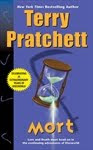
Back in September 2011, Walhydra was reading Mort, the fourth volume of Terry Pratchett's brilliant Discworld Series. (She thinks it's the fourth...time is weird on Discworld. She's already read The Color of Magic, The Light Fantastic, and Equal Rites.)
Walhydra likes pretty much everything about the Discworld books, but her favorite character so far is—surprise, surprise—Death. Or should we say DEATH, since he always speaks in upper case, without quotation marks? He always appears as a hooded, animated skeleton with glowing eyes.
What Walhydra admires most about Death is his attitude toward...um...death.
As far as Death is concerned, death is not some sort of evil consequence or punishment for mortals. It's just his job. All mortals die, and Death's job is to help them finish the business.
It's the mortals who, clinging to their lives, label death as "evil," as "punishment." Poor Death struggles with the unfair blame...though he always rises above it.
The title character in Mort is a young mortal whom Death takes on as an apprentice.
"Er," [Mort] began. "I don't have to die to get the job, do I?"Death leads Mort to the great twin city of Ankh-Morpork, where they stop for a meal at the Curry Garden. The place is crowded, "but only with the cream of society—at least, with those people who are found foating on the top and who, therefore, it's wisest to call the cream." (19)
BEING DEAD IS NOT COMPULSORY.
"And...the bones...?"
NOT IF YOU DON'T WANT TO. (12-13)
Mort is puzzled by the fact that, besides himself, no one seems to see Death.
"Is it magic?" said Mort.Pretty much sums it up.
WHAT DO YOU THINK? said Death. AM I REALLY HERE, BOY?
"Yes," said Mort slowly. "I...I've watched people. They look at you but they don't see you, I think. You do something to their minds."
Death shook his head.
THEY DO IT ALL THEMSELVES, he said. THERE'S NO MAGIC. PEOPLE CAN'T SEE ME, THEY SIMPLY WON'T ALLOW THEMSELVES TO DO IT. UNTIL IT'S TIME, OF COURSE. WIZARDS CAN SEE ME, AND CATS. BUT YOUR AVERAGE HUMAN...NO, NEVER.
He blew a smoke ring at the sky, and added, STRANGE BUT TRUE. (20)
And so it is.
Blessèd be.
Here is a beautiful portrait of Terry Pratchett and Death, done by Flynn-the-Cat and posted on DeviantArt and RedBubble.
Flynn's own commentary on the portrait:
A portrait of Terry Pratchett, his Death and his Discworld.Here's a link to a new Terry Pratchett interview on the Late, Late Show, and a link to an NPR interview in August 2011.
He's the creator of the Discworld, that little planet being carried away into space by the turtle Great A'Tuin, with the sun setting on it.
Death, the walking skeleton with an awful lot of character appears in all his books (however briefly) and spends a lot of time trying to figure people out. he's here because a) it's about dying (mental, age, possible-suicide), b) he's kinda a reflection of people (he is shaped by their expectations, so he's in mirror image to Pterry, c) he's one of Pterry's greater legacies, and d)... well, if anyone outlives the Discworld, it'll be Death.
The lilacs were worn in memory of a revolution in Night Watch and are now the symbol of Wear the Lilac Day on May 25th - Discworld Day, and now dedicated to Alzheimer's Awareness.
Because—oh yes, Terry Pratchett has Alzheimer's Disease. And I started painting this while listening to his documentary on assisted dying: Terry Pratchett: Choosing To Die.
Terry's own website is here.
Labels:
death,
Discworld,
mortality,
Terry Pratchett
Saturday, January 15, 2011
Lois
Jim and I sat with Mom for the last couple hours of her life last night.
Before sunrise on Wednesday, I had awoken from a powerful dream, in which the vibrant, out-going Mom whom I haven't seen in several years was holding everyone's attention at a party with her three brother and other family and friends.
Later that morning, when I visited her at St. Catherine Labouré Manor, I found her in her recliner in the sunny hallway outside her room, her head pillowed against the hand rail since she could no longer sit up straight. As often happened, when she awoke and saw me, she lit up.
I told her briefly about the dream, and she smiled and nodded. We sat for a while. Once I saw that she was drifting off to sleep again, I said, "I love you." She mouthed the words back to me.
Last night, the nurse phoned us to say that Mom had labored breathing and very low blood oxygen. We sat with her as her breaths became slower and shallower, until she stopped breathing around 10:17 PM.
We are grateful for the time and love she has given so many of us.

Blessèd Be,
Michael Bright Crow
Before sunrise on Wednesday, I had awoken from a powerful dream, in which the vibrant, out-going Mom whom I haven't seen in several years was holding everyone's attention at a party with her three brother and other family and friends.
Later that morning, when I visited her at St. Catherine Labouré Manor, I found her in her recliner in the sunny hallway outside her room, her head pillowed against the hand rail since she could no longer sit up straight. As often happened, when she awoke and saw me, she lit up.
I told her briefly about the dream, and she smiled and nodded. We sat for a while. Once I saw that she was drifting off to sleep again, I said, "I love you." She mouthed the words back to me.
Last night, the nurse phoned us to say that Mom had labored breathing and very low blood oxygen. We sat with her as her breaths became slower and shallower, until she stopped breathing around 10:17 PM.
We are grateful for the time and love she has given so many of us.

1924 - 2011
And so it is.Blessèd Be,
Michael Bright Crow
Sunday, May 09, 2010
Ruthlessness
Crippled Wolf has been trying to help Walhydra get back to telling her story here. It isn’t easy, because they share a common grief, a common burden of seemingly overwhelming responsibilities.
Walhydra has been struggling for months—actually for several years—with the dilemma that worry and grief are difficult to turn into comedy. Through March and April, Walhydra's mother, Senior Witch, took another downturn due to a systemic infection. Walhydra has had to focus herself ruthlessly on "getting things done." No time for storytelling—except when she is crying with hubby Jim or updating family and friends.
"At least now," Walhydra says, "I usually recognize those first steps toward depression when they tempt me, and I’m fighting not to go there."
A small comfort but a real one, since she needs to be able to act.
As for Crippled Wolf, it's not that he feels the sorrow and loss any less. It's just that, being closer to the animal reality of humankind, he can be more dispassionate, more ruthless if necessary, in dealing with what happens to him.
He feels grief, feels it deeply, yet it is something which happens in the stream of moment, not something which stalls the flow.
He howls his sorrow, yet he knows he must keep acting, keep running, keep hunting, keep playing—not to avoid or deny the pain, but simply to continue being.
Recently, Crippled Wolf's younger brother, one of the bravest men he knows, told a story on himself which resonates here.
Younger Brother has always had to be more of a maker, more of a scrapper, than Crippled Wolf needed to be. Third child, he was the spiritually orphaned high-schooler who had to find his own way, after his elder siblings left for college, when their parents were withdrawing into the silence which would eventually lead to divorce.
Younger Brother is a gifted actor, writer, teacher, director, yet he hasn't enjoyed much of the reliable mentoring and door-opening by elders which have flowed his brother’s way. He has had to father himself and to become a good father on his own. His blessing is that he has done both well.
For the past two decades, Younger Brother has fended for and defended his wife and son in a progressively more bankrupt northern city, where teen gang warfare encroaches on his neighborhood, where his artist wife has lost her non-profit child development job, and where the university he works for disdains the theater program they hired him to develop.
At the start of this year, the university suddenly moved the whole performing arts faculty out of a building they were tearing down and into temporary quarters, with no promise that a new building was in the works—and with no performance space of their own!
To make things more “interesting,” this year Younger Brother is acting chair of that department while the chair is on sabbatical leave. This means that, at the same time that he is teaching theater arts without a theater, directing two community group plays, and encouraging his wife and his brilliant college-senior son, he also has to manage the administrative needs of a displaced and frightened orphan faculty.
Oy!
Narrating all of this by phone one night, Younger Brother laughed almost maniacally.
“I’m finding that I just scale back my attention to the emotional distress of my colleagues when they bring problems to me. I listen, but then I set it aside and say, ‘Just tell me what you want to get done here.’ “
He laughed again.
“One program director hand-picked an associate fifteen years ago, but now they can’t be in the same room with each other. She comes to me with complaints about personality conflicts, and I just say, ‘But what do you want her to do? Make it clearer for me. What do you want to have happen here?’ ”
“Ah,” said Crippled Wolf, recognizing tactics for managing crisis from his own prison counselor past. “So you’re actually directing three plays.”
“More than three!”
Crippled Wolf came away from this call with a paradoxical new name for an old notion: compassionate ruthlessness.
There are times when caring for people means maneuvering them to get on with business. There are situations—whole periods of life—when what is happening is too fraught with mortal consequence for us to nurse feelings. Feelings are information. Acknowledge the information, then act.
Cry later.
“You have to cry,” he says. “You have to honor the body’s need to release the grief. But do it later, after you’ve saved whatever lives or life you can save.”
Not nice. Not courteous.
Yet perversely salutary.
So, Wednesday morning, Crippled Wolf walked into the “secure” ward in the new skilled nursing facility to which he has had to move Senior Witch due to her increased escape-seeking and oppositional behavior.
Senior Witch glared fiercely from the wheelchair in which she is restrained, since the rehab staff haven’t released her back to her walker yet.
“This is the worst place I’ve ever been!” she growled. “This is like….” She couldn’t find words to describe it.
“Okay,” Crippled Wolf replied neutrally. “Well, let’s go get your glasses and hearing aids, and we’ll go walk in the garden by the river.”
He wheeled her to the nursing station, got her things, wheeled her to the garden path, and helped her climb out of the wheelchair, so that she could walk beside him.
They walked and sat and talked and watched the river and looked at the roses. Senior Witch surprised him, when he gave her a new card from one of her stepdaughters, but immediately reading the whole thing out loud to him.
They spent an hour together, just being.
He said nothing about her anger.
Back in the ward—after he had made sure the nursing staff saw how well she could walk—Crippled Wolf helped her back into her wheelchair. He knelt beside her, kissed her, and said, “I’ll see you this weekend. I love you.”
“I love you, too,” she said.
As he walked away, Crippled Wolf watched her genuine smile deflate into a forced one.
He knew he needed to get home, so that he could howl with Jim.
And so it is.
Blessèd Be.

Walhydra has been struggling for months—actually for several years—with the dilemma that worry and grief are difficult to turn into comedy. Through March and April, Walhydra's mother, Senior Witch, took another downturn due to a systemic infection. Walhydra has had to focus herself ruthlessly on "getting things done." No time for storytelling—except when she is crying with hubby Jim or updating family and friends.
"At least now," Walhydra says, "I usually recognize those first steps toward depression when they tempt me, and I’m fighting not to go there."
A small comfort but a real one, since she needs to be able to act.
As for Crippled Wolf, it's not that he feels the sorrow and loss any less. It's just that, being closer to the animal reality of humankind, he can be more dispassionate, more ruthless if necessary, in dealing with what happens to him.
He feels grief, feels it deeply, yet it is something which happens in the stream of moment, not something which stalls the flow.He howls his sorrow, yet he knows he must keep acting, keep running, keep hunting, keep playing—not to avoid or deny the pain, but simply to continue being.
Recently, Crippled Wolf's younger brother, one of the bravest men he knows, told a story on himself which resonates here.
Younger Brother has always had to be more of a maker, more of a scrapper, than Crippled Wolf needed to be. Third child, he was the spiritually orphaned high-schooler who had to find his own way, after his elder siblings left for college, when their parents were withdrawing into the silence which would eventually lead to divorce.
Younger Brother is a gifted actor, writer, teacher, director, yet he hasn't enjoyed much of the reliable mentoring and door-opening by elders which have flowed his brother’s way. He has had to father himself and to become a good father on his own. His blessing is that he has done both well.
For the past two decades, Younger Brother has fended for and defended his wife and son in a progressively more bankrupt northern city, where teen gang warfare encroaches on his neighborhood, where his artist wife has lost her non-profit child development job, and where the university he works for disdains the theater program they hired him to develop.
At the start of this year, the university suddenly moved the whole performing arts faculty out of a building they were tearing down and into temporary quarters, with no promise that a new building was in the works—and with no performance space of their own!
To make things more “interesting,” this year Younger Brother is acting chair of that department while the chair is on sabbatical leave. This means that, at the same time that he is teaching theater arts without a theater, directing two community group plays, and encouraging his wife and his brilliant college-senior son, he also has to manage the administrative needs of a displaced and frightened orphan faculty.
Oy!
Narrating all of this by phone one night, Younger Brother laughed almost maniacally.
“I’m finding that I just scale back my attention to the emotional distress of my colleagues when they bring problems to me. I listen, but then I set it aside and say, ‘Just tell me what you want to get done here.’ “
He laughed again.
“One program director hand-picked an associate fifteen years ago, but now they can’t be in the same room with each other. She comes to me with complaints about personality conflicts, and I just say, ‘But what do you want her to do? Make it clearer for me. What do you want to have happen here?’ ”
“Ah,” said Crippled Wolf, recognizing tactics for managing crisis from his own prison counselor past. “So you’re actually directing three plays.”
“More than three!”
Crippled Wolf came away from this call with a paradoxical new name for an old notion: compassionate ruthlessness.
There are times when caring for people means maneuvering them to get on with business. There are situations—whole periods of life—when what is happening is too fraught with mortal consequence for us to nurse feelings. Feelings are information. Acknowledge the information, then act.
Cry later.
“You have to cry,” he says. “You have to honor the body’s need to release the grief. But do it later, after you’ve saved whatever lives or life you can save.”
Not nice. Not courteous.
Yet perversely salutary.
So, Wednesday morning, Crippled Wolf walked into the “secure” ward in the new skilled nursing facility to which he has had to move Senior Witch due to her increased escape-seeking and oppositional behavior.
Senior Witch glared fiercely from the wheelchair in which she is restrained, since the rehab staff haven’t released her back to her walker yet.
“This is the worst place I’ve ever been!” she growled. “This is like….” She couldn’t find words to describe it.
“Okay,” Crippled Wolf replied neutrally. “Well, let’s go get your glasses and hearing aids, and we’ll go walk in the garden by the river.”
He wheeled her to the nursing station, got her things, wheeled her to the garden path, and helped her climb out of the wheelchair, so that she could walk beside him.
They walked and sat and talked and watched the river and looked at the roses. Senior Witch surprised him, when he gave her a new card from one of her stepdaughters, but immediately reading the whole thing out loud to him.
They spent an hour together, just being.
He said nothing about her anger.
Back in the ward—after he had made sure the nursing staff saw how well she could walk—Crippled Wolf helped her back into her wheelchair. He knelt beside her, kissed her, and said, “I’ll see you this weekend. I love you.”
“I love you, too,” she said.
As he walked away, Crippled Wolf watched her genuine smile deflate into a forced one.
He knew he needed to get home, so that he could howl with Jim.
And so it is.
Blessèd Be.

Labels:
Crippled Wolf,
death,
grief,
mileposts,
mortality,
Senior Witch
Tuesday, October 27, 2009
Grief and distraction
Dear Ones,
I decided to withdraw from Walhydra's Back Porch Part 1 of "Walhydra's White Slave Adventure." No problem with the story itself, but right now I don't feel like pursuing it.
I had started posting Part 1 late one night last weekend—as I now realize—in order to distract myself from my rising grief over moving Mom from assisted living into skilled nursing care.
Now the grief has broken through...or at least another layer of it has broken through.
I'm back on that tightrope I fell off of during 2007, when we moved Mom from her home to my sister's home, this time trying to maintain the balance between making the practical decisions and allowing the grief to hurt.
You all know about this in your own lives.
We are mortal.
Mother-Father God loves us and lifts us up.
But we are mortal.
Blessèd Be,
Bright Crow
Please see Cat's post Loss on Quaker Pagan Reflections.
I decided to withdraw from Walhydra's Back Porch Part 1 of "Walhydra's White Slave Adventure." No problem with the story itself, but right now I don't feel like pursuing it.
I had started posting Part 1 late one night last weekend—as I now realize—in order to distract myself from my rising grief over moving Mom from assisted living into skilled nursing care.
Now the grief has broken through...or at least another layer of it has broken through.
I'm back on that tightrope I fell off of during 2007, when we moved Mom from her home to my sister's home, this time trying to maintain the balance between making the practical decisions and allowing the grief to hurt.
You all know about this in your own lives.
Mother-Father God loves us and lifts us up.
But we are mortal.
Blessèd Be,
Bright Crow
Please see Cat's post Loss on Quaker Pagan Reflections.
Labels:
death,
grief,
mortality,
Senior Witch
Thursday, October 22, 2009
Senior Witch in stir
Just about everyone Walhydra knows at work, at home and online seems to be hanging by a thread right now.
Between deaths, illnesses, severely increasing staff and budget austerity on the job, loss of jobs, loss of homes, and so on, friends are barely managing—yet still managing, somehow—to hold each other up in tenderness. Forgiving each others lapses and sharp edges, simply because Something keeps helping them to remember that they are all in this together.
Walhydra and Hubby Jim, themselves, have been struggling for weeks with the reality that their Mom, Senior Witch, can no longer live safely in assisted living.
She has fallen five times since the beginning of September, three of those falls in one week, all of them alone in her room.
Three trips to ER, two cuts to the forehead which required stitches, a hospital stay for CAT scans, MRI and ultrasound of the carotid arteries, but no explanation for the falls—except that she is increasingly neglecting food, water and hygiene and probably standing up too fast.
When Walhydra brought Senior Witch back from being stitched up after the latest fall two weeks ago, she knew decisively that it was time to move her Mom into skilled nursing care.
This has been a wrenching experience...and Walhydra is so exhausted that she is letting her amanuensis fill out this post with excerpts from an email exchange with R, JimJim's ex and still a dear friend and mentor for both Walhydra and her hubby.
Here's the gist of it.
Monday, R:
Senior Witch jokes that, as a child, she distressed her beloved maiden aunts during a holiday visit by singing a song she'd learned on the radio.
It was one she liked the sound of, but whose lyrics she barely paid attention to as she sang them.
Her aunts thought she was singing about staying with them.
Senior Witch does still have a sense of humor...thank Goddess! It's in there...somewhere....
Here's Hubby Jim's response to Walhydra's latest email (which she CCed to him):
What else can we do?
Blessed Be.
Another sweet reply from our friend R:
Between deaths, illnesses, severely increasing staff and budget austerity on the job, loss of jobs, loss of homes, and so on, friends are barely managing—yet still managing, somehow—to hold each other up in tenderness. Forgiving each others lapses and sharp edges, simply because Something keeps helping them to remember that they are all in this together.
Walhydra and Hubby Jim, themselves, have been struggling for weeks with the reality that their Mom, Senior Witch, can no longer live safely in assisted living.
She has fallen five times since the beginning of September, three of those falls in one week, all of them alone in her room.
Three trips to ER, two cuts to the forehead which required stitches, a hospital stay for CAT scans, MRI and ultrasound of the carotid arteries, but no explanation for the falls—except that she is increasingly neglecting food, water and hygiene and probably standing up too fast.
When Walhydra brought Senior Witch back from being stitched up after the latest fall two weeks ago, she knew decisively that it was time to move her Mom into skilled nursing care.
This has been a wrenching experience...and Walhydra is so exhausted that she is letting her amanuensis fill out this post with excerpts from an email exchange with R, JimJim's ex and still a dear friend and mentor for both Walhydra and her hubby.
Here's the gist of it.
Monday, R:
Thanks for the update, how are you holding up sport? Love you muchly.Tuesday, W:
I feel like I haven't slept in six weeks, since Mom's first fall (Sept. 5). Not constant worry, but constant background worry. You know how that goes.Tuesday, R:
Lot's of friendly support, good on-going contact with my sister and brother.
Thanks for your love.
Hugs babe.Wednesday, W:
Thanks, R.Wednesday, R:
I'm concerned, because I catch myself being tempted by the old lure of depression, that false escape from difficulties. Don't want to go that road again, precisely because it makes it so much harder to act decisively...but I'm sad and tired...and everyone around me seems the same.
Running on faith without the accompanying feelings at present.
The coincidence of autumn and Mom's drastic decline leaves me plodding along. Jim's very burned out, too, from a very heavy work load this semester. And we're struggling at the library due to hiring freeze, budget cuts and, now, seasonal illnesses.
National and global news is not uplifting either.
Other than that, Mrs. Lincoln, how was the play?
[Thanks, Walhydra, for the note of levity. :-) ]
All sounds worse than it probably actually is...but that's the difficulty.
Where did I leave my bootstraps?
:-\
I gladly will loan you my boot hooks to go into your bootstraps, dear friend, and I praise God that you really do not need them.Thursday, W:
You are your mother's witch child, and you know the things you must do, even as tired as you may feel.
I can and do send you my energy to share and use just as quickly as you need to. I am with you always and will give you strength to persevere my friend.
"I will lift up mine eyes unto the hills, from whence comes my help." (Psalm 121:1)
Blessèd Be.
Thanks, Dear One.Walhydra realized today that this space also reminds her of twelve years "behind the wall" as a prison counselor...watching pairs of inmates share rooms the size of her bathroom.
As you point out, there is that higher order level of awareness which continues to say, "You know the things you must do."
This morning, when the alarm went off at 6:30, I found I wanted to get out of bed at once.
That's progress.
I did my lower back exercises for the first time in weeks. I dressed. I fed the furry brothers. I actually ate breakfast myself, instead of running away from the house in the morning dark and getting just coffee at Starbucks.
That's progress.
Mom doesn't understand why she's where she is now, and she wants me to "take her home."
I know she has to stay in skilled nursing—regardless of how well rehab goes.
Somehow, we all need to help her to understand, at some level, that this new place is safe and wholesome.
Aside from the dementia, there is the dislocation for this very private person of being in a hospital-like room with no privacy, and the noise of other residents and staff (and the beeping of alarms) all around her....
And no room in the room. Just the bed, the nightstand, the cupboard...and the other bed. That bed is now empty, but it stands as a further "threat" to personal boundaries.
Oy!
I hate it myself. When I first saw the room, I felt despair, even knowing she has to stay here. Especially knowing she has to stay here.
I can't tell how demented she is, how much or little of this she normally notices...because when we visit, she is still able to come into focus and present something of the old Senior Witch persona and intelligence.
I can tell she is unhappy.
Prayers for Mom. Inward assurance and peace.
What else can we do?
Love, and
Blessed Be.
Senior Witch jokes that, as a child, she distressed her beloved maiden aunts during a holiday visit by singing a song she'd learned on the radio.It was one she liked the sound of, but whose lyrics she barely paid attention to as she sang them.
Her aunts thought she was singing about staying with them.
Now if I had the wings of an angel,Now Walhydra will have to hang the picture of these two aunts over Senior Witch's bed and tease her into singing that song.
Over these prison walls I would fly....
Senior Witch does still have a sense of humor...thank Goddess! It's in there...somewhere....
Here's Hubby Jim's response to Walhydra's latest email (which she CCed to him):
I love you very much, Sweet Man. Let’s work together to help her to adjust to the new environment, and to assure her that we will be there when she needs us.Walhydra says, "Let's all work together to help all of us, to assure all of us."
What else can we do?
Blessed Be.
Another sweet reply from our friend R:
I find so very startling at times to realize that no matter how much I wish to ignore the hard decisions of life, the inner spirit always guides me in the right direction to do the things I must do for peace of mind.
Be at peace with that which has presented itself to Senior Witch as she walks softly into the sunset of her mind for I am convinced that when we may be presented with what appears as confusion, she is in some special mode of recall that allows her to persist in the life and loves she has left in this life.
Confusion to us may be a process of discarding the unwanted and, more importantly unnecessary baggage, to allow for the warmth or grace to seep into the very marrow of her being.
May it be so for her and eventually for us as well.
Selah!
Peace is with you, in you, and around you; stop and take notice of the peace of God.
(Please note that I am in tears because I am preaching to my self as well brother.)
Ahhh, Blessed Peace...
I love you, R
Labels:
death,
grace,
mortality,
Senior Witch
"Living in the Kingdom of God"
Walhydra's buddy Cat has posted an article, Living in the Kingdom of God, about the death of her friend Abby, over on the Bad Quaker Bible Blog.
As we Quakers say, "This speaks to my condition."

Blessèd Be,
Michael Bright Crow
As we Quakers say, "This speaks to my condition."

I have seen flocks of birds rising together in a wave, flying so close that wing nearly brushes wing. With invisible signals, they know: now we wheel. Now we soar. Together in one wave they crest and rise and fall, gathered in beauty. To me, that is a vision of the Kingdom of God.And so it is.
And last night was a vision of the Kingdom of God.
Wheeling and turning, embracing and mourning a friend, we stood gathered by grace and by gratitude into the living presence where there is no loss, there is no death, and every eye reflects back all the love it has been given, fully and without distortion, into the eye of every other.
The Kingdom of God, the Kingdom of Joy, the Kingdom of Love is right now, forever, and every minute; if we let it. If we have the strength (or the grace) to find the love, even in the heart of loss.
We do not need to wait for heaven. We live in the Kingdom now.
May God heal all hearts.
Blessèd Be,
Michael Bright Crow
Monday, October 05, 2009
Footnote to "The Dark, again"
Walhydra didn't mention in "The Dark, again" that Lammas is short for Loaf Mass, which is what the Christians renamed the Pagan harvest festival on August 1st.
In the Irish Celtic tradition, this festival is Lughnasadh. Here's a bit from Chalice Centre for Celtic Spirituality and Western Inner Traditions:
Because it reminds Walhydra that around August 1st is the beginning of harvest. And for as long as humankind has relied upon the gift of cultivation, humankind has known that harvest is the beginning of the dying time of year.
The Earth gives her body to give us food.
We celebrate her funeral with games and dance and feast.
Knowing that we, too, will die and go back to the Earth.
Thank you, Domi,
and to all of you,
Blessed Be.
Note: Brian Friel wrote a play, Dancing at Lughnasa, which was made into a movie in 1998.
In the Irish Celtic tradition, this festival is Lughnasadh. Here's a bit from Chalice Centre for Celtic Spirituality and Western Inner Traditions:The Celtic harvest festival on August 1st takes its name from the Irish god Lugh, one of the chief gods of the Tuatha De Danann, giving us Lughnasadh in Ireland, Lunasdál in Scotland, and Laa Luanys in the Isle of Man. (In Wales, this time is known simply as Gwl Awst, the August Feast.)Domi, one of my long-time Crone Thread friends, wrote the following reminder, in response to "The Dark, again":
Lugh dedicated this festival to his foster-mother, Tailtiu, the last queen of the Fir Bolg, who died from exhaustion after clearing a great forest so that the land could be cultivated. When the men of Ireland gathered at her death-bed, she told them to hold funeral games in her honor. As long as they were held, she prophesied Ireland would not be without song.
Tailtiu’s name is from Old Celtic Talantiu, "The Great One of the Earth," suggesting she may originally have been a personification of the land itself, like so many Irish goddesses.
In fact, Lughnasadh has an older name, Brón Trogain, which refers to the painful labor of childbirth. For at this time of year, the earth gives birth to her first fruits so that her children might live.
Lughnasadh is a funeral—that's what Nasadh means, the funeral assembly of Lugh for his foster mother, during the nine days of the barley-harvest.This helps Walhydra to make sense of her August 1st experience each year, namely, her awareness of the "thinning of the veil."
As we gather in the life-sustaining grain we hold the funeral games and feast, that Lugh consider her sufficiently remembered and honoured and not in his grief and rage manifest as storm-god and destroy the rest of the harvest before we can gather it all in.
Because it reminds Walhydra that around August 1st is the beginning of harvest. And for as long as humankind has relied upon the gift of cultivation, humankind has known that harvest is the beginning of the dying time of year.
The Earth gives her body to give us food.
We celebrate her funeral with games and dance and feast.
Knowing that we, too, will die and go back to the Earth.
Thank you, Domi,
and to all of you,
Blessed Be.
Note: Brian Friel wrote a play, Dancing at Lughnasa, which was made into a movie in 1998.
Labels:
death,
Lammas,
Lughnasadh,
mortality,
The Dark
Saturday, October 03, 2009
The Dark, again
Walhydra notices something a bit different about the onset of The Dark this year.
Thank Goddess, it's not the psychotic rollercoaster ride of two years ago, when chronic depression actually overthrew Walhydra's homeostatic whosiwhatsis, so that her brain couldn't keep the serotonins in balance. It's also not the long slow decline into the fat-fed lethargy of Winter Solstice holidays...not yet, anyway.
Instead, what Walhydra is gradually becoming aware of is an uncomfortable sense of transparency.
"No, I don't mean that I can see through myself," Walhydra snorts. "It's just that I can...well...see through myself…and others...."
Let's backtrack a bit.
Walhydra tends to get her first annual glimpse of The Dark around Lammas Day, August 1st, the old English festival of first harvest.
She knows that the modern calendar considers Summer Solstice to be the beginning of summer, which would make Lammas mid-summer's day.
For some time, though, it has been at Lammas that Walhydra senses the first whiff of autumn in the air…just as at Candlemas (aka Imbolc, aka Groundhog's Day, aka February 2nd) she senses the first whiff of spring.
After a few years of experiencing this backwards shifting of "whiffs" through the cycle of the seasons, Walhydra finally decided just to go with it.
Now she starts counting autumn from Lammas, with second harvest at Fall Equinox as "high autumn," and third harvest at Hallowe'en (aka Samhain) as the first whiff of winter.
Somehow this widdershins shifting of the seasons helps Walhydra to be better prepared for their changes, better prepared to watch for their subtleties and complexities.
Anyway, this year at Lammastide Walhydra noticed not just the first whiff of autumn. She noticed the "thinning of the veil" between the living and the dead, which Pagan tradition places at Samhain, half a year later. Granted, it took a month or so for her to realize that this was what she had sensed, yet by now the message is clear.
The message isn't an apocalyptic, end-of-the-world kind of message. It is present-moment and down-to-earth.
We are all mortal…now.
The veil between the living and the dead is our own bodies. They are always thin, and they grow thinner by the moment.
"What's going on here?" Walhydra laments.
Until two years ago, autumn had always been Walhydra's favorite season. She loves the crisp air and the fall colors—although Florida…ahem…somewhat lacks the vast forests of autumn-covered hills of Walhydra's Ohio childhood.
Then came the serotonin crisis, actually a physiological over-response to the family crisis of moving Walhydra's mother, Senior Witch, to Florida and beginning the long process of selling Senior Witch's house from 300 miles away.
Last year, after Senior Witch had moved yet again to an assisted living facility (ALF) near Walhydra, there was no chemical or family crisis, yet the taste of autumn had become somewhat spoiled. Walhydra realized that her brainstem was reacting to the shorting days be deciding it was time to feel chilly and to anticipate grief.
This year, autumn has an added taste. Aside from the obvious seasonal changes, The Dark now brings with it a concrete and increasing sadness about mortality.
"But it's not just sadness about mortality," Walhydra explains in a somewhat subdued tone. "It's mortality itself, which feels very real this year. Not just a notion, not just an abstraction from a fact to be dealt with...eventually."
It isn't fear of mortality, either. It's simply knowledge.
"We are all running up against actual, irreversible limits," she says. "It's a basic, visceral reality."
Four Saturdays ago, Walhydra and Hubby Jim were called to the hospital at 2 AM. Senior Witch had fallen in her bathroom. She got nine stitches in her right temple and had to have a huge flap of fragile skin taped back in place on the back of her right hand.
No concussion, no broken bones, so, fortunately, not a major fall. In fact, Walhydra watched bemused as this steadily shrinking old lady joked with the ER doctor about "my poor, ugly hand" and rebounded by lunchtime the same day to gossip with her friends at the lunch table.
But…Senior Witch has clearly moved into the childlike phase of Alzheimer's.
She still remembers people. She is still that sweet person who charms everyone she meets. She still sometimes summons the mental focus for brilliant conversation.
Usually, though, she takes a child's approach, making up explanations and excuses for troubling things that happen…including that fall. And she rewrites her own history, free-associating different real and imagined details to account for events…including that fall.
She is unlearning. The likelihood of teaching her new safety steps is questionable.
In response, Walhydra has had to drag her clinical social worker persona out of mothballs to deal with crisis and follow-up issues with emergency room staff and with ALF resident care administrators.
The certain knowledge of mortality hit home about a week or so after Senior Witch's fall.
This was when each next story of hurt or loss, a bombing in Pakistan or a shooting in the US or a library colleague's family illness or…whatever, became not just another story but visceral evidence that we are fragile, irreplaceable animals with an irreversible mortality.
And the sadness....
Walhydra has begun waking up each morning in sadness. Not the crazy sadness of brain chemistry imbalance, but base-line racial sadness.
She gets booted back into consciousness at 4:30, 5:30, 6:00 in the morning. Staggers into the living room to do some sort of imitation of tai chi and meditation. Flees from the over-focus of meditation back to the bedroom to clasp herself against the warmth of Hubby Jim...who dutifully rolls into playing spoons, even in his sleep.
And stifles the temptation to descend into a serotonin-exhausted grief because she knows that Jim, too, will age and die.
Last weekend, Walhydra took a long overdue trip back to her home in Columbia, SC, to spend a Friday evening with her longest-known and best friend there, and Saturday and Sunday with her father, the Lutheran preacher, and his second wife.
The visit with her friend, whom Walhydra considers her senior Virgo mentor and technology guru, was excellent, as always. It's a relief to escape the mundane world into the saner company another Virgo practitioner.
[Note from the amanuensis: "The power of accurate observation is commonly called cynicism by those who have not got it." George Bernard Shaw, Irish dramatist & socialist (1856–1950)...a Leo, but it's the thought that counts.]
The visit with Walhydra's father had a peculiar, frustrating grace.
Her father has Parkinson's. It makes him mumble so much he's difficult to talk with...this man who's been a preacher and teacher for most of his eighty-some years. It makes his handwriting tiny. He's feeble and shrunk down to nothing and bruised and bored.
For decades, Walhydra has struggled with a compounded version of the classic eldest-son's resentment of and distrust toward his father. Despite—or maybe because of—both of them being gentle, sensitive, articulate men, the father-son misconnections of patriarchal cultures have all been painfully present.
All of that was compounded further by Walhydra's being in the closet her first twenty-some years. Compounded yet again by her father's having left Senior Witch for another woman, back in the late1970s.
Still, over the past decade, both Walhydra and her father have been graced with what forgiveness is often really about: the ability to willingly forget past sins.
"It's too important to be together now," Walhydra explains.
"I'll never get an acknowledgement from him of all his 'crimes'...or, most likely, be able to give him my own acknowledgements. But I don't need that any more in order to be okay with myself. What I need is just to be with him in the present."
So that's what they did.
They sat together watching hours of Saturday football.
[Patriarchal culture's ultimate irony: two peaceable men, bonding...as best they can, since they can't speak...by watching other men fight.]
They listened to her stepmother's parrots and cockatoos and canaries talking and making noise out on the sunporch. They shopped for groceries. They had silent meals together.
And talked as much as they could manage...which, though painfully spare, was enough.
On Sunday morning, Walhydra's father cooked lunch and then forced himself to a level of articulateness, in order to speak briefly about how his parents lived into their late eighties, and how his eldest brother is now in his nineties.
"I guess I've got a few more years left," he smiled. They both smiled, Walhydra feeling the hollowness grow behind her solar plexus.
They stood and shared one of the longest, warmest, best hugs they've shared in years.
And, when Walhydra finally let go...her father collapsed backwards like a tree and landed up against the kitchen cupboards.
"Dad! Dad!" Walhydra knelt in front of him with her hand behind his neck, supporting his head.
He looked dazed, then his eyes cleared, and he said, "I'm all right. I'm all right. I sort of blanked out for a moment."
Once she sensed he was okay and had gotten him into his armchair in the den, Walhydra went for her stepmother.
"Did he hit his head?" Stepmother asked.
"Yes."
"Where?"
Walhydra put her hand behind the top of her head.
"Oh. Well, then, he's all right."
Walhydra stared in confusion, used to yet still startled by Stepmother's blunt, practical manner.
"He has a hard head. As long as he didn't hit the bottom of his skull...."
"Oh."
Stepmother spoke to Dad and checked his blood pressure.
The two of them laughed if off, to Walhydra's dismay...though at some level she trusted their humor.
"Did I scare you?" Dad asked.
"I think you hugged him too hard," Stepmother said. "It might have impeded the flow of blood to his brain."
Walhydra nodded blankly, knowing that they were not teasing her but, rather, witnessing to her their daily, moment-by-moment method of coping with...well...their age and mortality.
The three of them spent a while longer reassuring each other, hugging each other (gently), and saying their goodbyes. Then Walhydra got in her car for the long, boringly safe drive back to Florida.
"I hugged him too hard?" Walhydra wondered.
Decades of longing for closeness with a distant father whom she remembered having been very physically affectionate in her childhood. Decades of longing to talk with a private, withdrawn father who now was open to her but could not speak.
And the most affectionate hug they had shared in years—exaggerated, perhaps, by Walhydra's longing—had made him pass out.
"Who's writing this script?" Walhydra asked with tragicomic sarcasm.
Here, then, is how Walhydra is coming to understand her transparency, and the transparency of everyone who crosses her path.
"We are mortal for every moment of our existence," she says. "And, for now, I'm seeing that...not in every moment, yet often.
"We are so fragile. Anything could tear the veil. Yet we stay alive...for a while."
Walhydra imagines a different reading on the Garden of Eden story.
She knows—as many people tend to forget—that Adam and Eve were created mortal, the same as all the other animals. Death is not a punishment. It is merely part of the Creation, about which the Divine One said, "It is good."
But when they ate that apple, suddenly they knew they were mortal, unlike any of the other animals.
The rest is show business.
Now, whenever someone does something that annoys or distresses or angers Walhydra, something stupid or selfish or inattentive...or...or....
Whenever that happens, Walhydra realizes, "Oh, he's mortal. That's his way of trying to cope with or deny his mortality at this moment."
That's how people have become transparent to Walhydra.
Well, maybe not "whenever," of course. Walhydra's own avoidance/denial habits tend to keep her in resentful curmudgeon mode—or, more kindly, in struggling human mode—much of the time.
That's how Walhydra has become more transparent to herself.
It all doesn't feel good...or maybe it sort of does. Like it sort of feels good when you fall backwards, crashing your head against a cabinet door, and then the pain at the back of your head starts to mellow and feel a bit warm.
Seeing in The Dark.
And so it is.
Blessèd Be.
Thank Goddess, it's not the psychotic rollercoaster ride of two years ago, when chronic depression actually overthrew Walhydra's homeostatic whosiwhatsis, so that her brain couldn't keep the serotonins in balance. It's also not the long slow decline into the fat-fed lethargy of Winter Solstice holidays...not yet, anyway.
Instead, what Walhydra is gradually becoming aware of is an uncomfortable sense of transparency.
"No, I don't mean that I can see through myself," Walhydra snorts. "It's just that I can...well...see through myself…and others...."
Let's backtrack a bit.
Walhydra tends to get her first annual glimpse of The Dark around Lammas Day, August 1st, the old English festival of first harvest.
She knows that the modern calendar considers Summer Solstice to be the beginning of summer, which would make Lammas mid-summer's day.For some time, though, it has been at Lammas that Walhydra senses the first whiff of autumn in the air…just as at Candlemas (aka Imbolc, aka Groundhog's Day, aka February 2nd) she senses the first whiff of spring.
After a few years of experiencing this backwards shifting of "whiffs" through the cycle of the seasons, Walhydra finally decided just to go with it.
Now she starts counting autumn from Lammas, with second harvest at Fall Equinox as "high autumn," and third harvest at Hallowe'en (aka Samhain) as the first whiff of winter.
Somehow this widdershins shifting of the seasons helps Walhydra to be better prepared for their changes, better prepared to watch for their subtleties and complexities.
Anyway, this year at Lammastide Walhydra noticed not just the first whiff of autumn. She noticed the "thinning of the veil" between the living and the dead, which Pagan tradition places at Samhain, half a year later. Granted, it took a month or so for her to realize that this was what she had sensed, yet by now the message is clear.
The message isn't an apocalyptic, end-of-the-world kind of message. It is present-moment and down-to-earth.
We are all mortal…now.
The veil between the living and the dead is our own bodies. They are always thin, and they grow thinner by the moment.
"What's going on here?" Walhydra laments.
Until two years ago, autumn had always been Walhydra's favorite season. She loves the crisp air and the fall colors—although Florida…ahem…somewhat lacks the vast forests of autumn-covered hills of Walhydra's Ohio childhood.
Then came the serotonin crisis, actually a physiological over-response to the family crisis of moving Walhydra's mother, Senior Witch, to Florida and beginning the long process of selling Senior Witch's house from 300 miles away.
Last year, after Senior Witch had moved yet again to an assisted living facility (ALF) near Walhydra, there was no chemical or family crisis, yet the taste of autumn had become somewhat spoiled. Walhydra realized that her brainstem was reacting to the shorting days be deciding it was time to feel chilly and to anticipate grief.
This year, autumn has an added taste. Aside from the obvious seasonal changes, The Dark now brings with it a concrete and increasing sadness about mortality.
"But it's not just sadness about mortality," Walhydra explains in a somewhat subdued tone. "It's mortality itself, which feels very real this year. Not just a notion, not just an abstraction from a fact to be dealt with...eventually."
It isn't fear of mortality, either. It's simply knowledge.
"We are all running up against actual, irreversible limits," she says. "It's a basic, visceral reality."
Four Saturdays ago, Walhydra and Hubby Jim were called to the hospital at 2 AM. Senior Witch had fallen in her bathroom. She got nine stitches in her right temple and had to have a huge flap of fragile skin taped back in place on the back of her right hand.
No concussion, no broken bones, so, fortunately, not a major fall. In fact, Walhydra watched bemused as this steadily shrinking old lady joked with the ER doctor about "my poor, ugly hand" and rebounded by lunchtime the same day to gossip with her friends at the lunch table.
But…Senior Witch has clearly moved into the childlike phase of Alzheimer's.
She still remembers people. She is still that sweet person who charms everyone she meets. She still sometimes summons the mental focus for brilliant conversation.
Usually, though, she takes a child's approach, making up explanations and excuses for troubling things that happen…including that fall. And she rewrites her own history, free-associating different real and imagined details to account for events…including that fall.
She is unlearning. The likelihood of teaching her new safety steps is questionable.
In response, Walhydra has had to drag her clinical social worker persona out of mothballs to deal with crisis and follow-up issues with emergency room staff and with ALF resident care administrators.
The certain knowledge of mortality hit home about a week or so after Senior Witch's fall.
This was when each next story of hurt or loss, a bombing in Pakistan or a shooting in the US or a library colleague's family illness or…whatever, became not just another story but visceral evidence that we are fragile, irreplaceable animals with an irreversible mortality.
And the sadness....
Walhydra has begun waking up each morning in sadness. Not the crazy sadness of brain chemistry imbalance, but base-line racial sadness.
She gets booted back into consciousness at 4:30, 5:30, 6:00 in the morning. Staggers into the living room to do some sort of imitation of tai chi and meditation. Flees from the over-focus of meditation back to the bedroom to clasp herself against the warmth of Hubby Jim...who dutifully rolls into playing spoons, even in his sleep.
And stifles the temptation to descend into a serotonin-exhausted grief because she knows that Jim, too, will age and die.
Last weekend, Walhydra took a long overdue trip back to her home in Columbia, SC, to spend a Friday evening with her longest-known and best friend there, and Saturday and Sunday with her father, the Lutheran preacher, and his second wife.
The visit with her friend, whom Walhydra considers her senior Virgo mentor and technology guru, was excellent, as always. It's a relief to escape the mundane world into the saner company another Virgo practitioner.
[Note from the amanuensis: "The power of accurate observation is commonly called cynicism by those who have not got it." George Bernard Shaw, Irish dramatist & socialist (1856–1950)...a Leo, but it's the thought that counts.]
The visit with Walhydra's father had a peculiar, frustrating grace.
Her father has Parkinson's. It makes him mumble so much he's difficult to talk with...this man who's been a preacher and teacher for most of his eighty-some years. It makes his handwriting tiny. He's feeble and shrunk down to nothing and bruised and bored.
For decades, Walhydra has struggled with a compounded version of the classic eldest-son's resentment of and distrust toward his father. Despite—or maybe because of—both of them being gentle, sensitive, articulate men, the father-son misconnections of patriarchal cultures have all been painfully present.
All of that was compounded further by Walhydra's being in the closet her first twenty-some years. Compounded yet again by her father's having left Senior Witch for another woman, back in the late1970s.
Still, over the past decade, both Walhydra and her father have been graced with what forgiveness is often really about: the ability to willingly forget past sins.
"It's too important to be together now," Walhydra explains.
"I'll never get an acknowledgement from him of all his 'crimes'...or, most likely, be able to give him my own acknowledgements. But I don't need that any more in order to be okay with myself. What I need is just to be with him in the present."
So that's what they did.
They sat together watching hours of Saturday football.
[Patriarchal culture's ultimate irony: two peaceable men, bonding...as best they can, since they can't speak...by watching other men fight.]
They listened to her stepmother's parrots and cockatoos and canaries talking and making noise out on the sunporch. They shopped for groceries. They had silent meals together.
And talked as much as they could manage...which, though painfully spare, was enough.
On Sunday morning, Walhydra's father cooked lunch and then forced himself to a level of articulateness, in order to speak briefly about how his parents lived into their late eighties, and how his eldest brother is now in his nineties.
"I guess I've got a few more years left," he smiled. They both smiled, Walhydra feeling the hollowness grow behind her solar plexus.
They stood and shared one of the longest, warmest, best hugs they've shared in years.
And, when Walhydra finally let go...her father collapsed backwards like a tree and landed up against the kitchen cupboards.
"Dad! Dad!" Walhydra knelt in front of him with her hand behind his neck, supporting his head.
He looked dazed, then his eyes cleared, and he said, "I'm all right. I'm all right. I sort of blanked out for a moment."
Once she sensed he was okay and had gotten him into his armchair in the den, Walhydra went for her stepmother.
"Did he hit his head?" Stepmother asked.
"Yes."
"Where?"
Walhydra put her hand behind the top of her head.
"Oh. Well, then, he's all right."
Walhydra stared in confusion, used to yet still startled by Stepmother's blunt, practical manner.
"He has a hard head. As long as he didn't hit the bottom of his skull...."
"Oh."
Stepmother spoke to Dad and checked his blood pressure.
The two of them laughed if off, to Walhydra's dismay...though at some level she trusted their humor.
"Did I scare you?" Dad asked.
"I think you hugged him too hard," Stepmother said. "It might have impeded the flow of blood to his brain."
Walhydra nodded blankly, knowing that they were not teasing her but, rather, witnessing to her their daily, moment-by-moment method of coping with...well...their age and mortality.
The three of them spent a while longer reassuring each other, hugging each other (gently), and saying their goodbyes. Then Walhydra got in her car for the long, boringly safe drive back to Florida.
"I hugged him too hard?" Walhydra wondered.
Decades of longing for closeness with a distant father whom she remembered having been very physically affectionate in her childhood. Decades of longing to talk with a private, withdrawn father who now was open to her but could not speak.
And the most affectionate hug they had shared in years—exaggerated, perhaps, by Walhydra's longing—had made him pass out.
"Who's writing this script?" Walhydra asked with tragicomic sarcasm.
Here, then, is how Walhydra is coming to understand her transparency, and the transparency of everyone who crosses her path.
"We are mortal for every moment of our existence," she says. "And, for now, I'm seeing that...not in every moment, yet often.
"We are so fragile. Anything could tear the veil. Yet we stay alive...for a while."
Walhydra imagines a different reading on the Garden of Eden story.
She knows—as many people tend to forget—that Adam and Eve were created mortal, the same as all the other animals. Death is not a punishment. It is merely part of the Creation, about which the Divine One said, "It is good."
But when they ate that apple, suddenly they knew they were mortal, unlike any of the other animals.
The rest is show business.
Now, whenever someone does something that annoys or distresses or angers Walhydra, something stupid or selfish or inattentive...or...or....
Whenever that happens, Walhydra realizes, "Oh, he's mortal. That's his way of trying to cope with or deny his mortality at this moment."
That's how people have become transparent to Walhydra.
Well, maybe not "whenever," of course. Walhydra's own avoidance/denial habits tend to keep her in resentful curmudgeon mode—or, more kindly, in struggling human mode—much of the time.
That's how Walhydra has become more transparent to herself.
It all doesn't feel good...or maybe it sort of does. Like it sort of feels good when you fall backwards, crashing your head against a cabinet door, and then the pain at the back of your head starts to mellow and feel a bit warm.
Seeing in The Dark.
And so it is.
Blessèd Be.
Labels:
death,
Lammas,
mileposts,
mortality,
Senior Witch,
The Dark,
Walhydra's Dad
Friday, November 02, 2007
Walhydra's year of becoming mortal
This one isn't at all easy to tell.
It's not that there's anything Walhydra is ashamed to reveal. Rather, she has wanted to write for several weeks, yet the source of the problem itself has prevented her.
Let's start it this way: last week Walhydra became part of a neurochemical experiment involving selective serotonin reuptake inhibitors (aka SSRI anti-depressants).
That was after she finally recognized just how much of her energy and concentration it was taking each day to tightrope walk with equanimity between anxiety and despair.
"Hell!" Walhydra says. "It's taking concentration just to make myself get out of bed in the morning...let alone do tai chi foundations, sitting meditation, bike riding, prayer, breakfast, or any of those other things which might nudge me toward wanting to do another day."
The crisis came two Mondays ago during the weekly LGBTQQFX bowling league, which Walhydra and hubby Jim usually enjoy so much.
"Well, I enjoy it now," Walhydra explains. "The first three years I hated it!"
Ever the self-critical Virgo, Walhydra used to get increasingly angry through each game, because she knew she could do better.
She pictures herself channeling her Swiss-German-Lutheran-pastor maternal grandfather, who used to utter a suppressed "Oh, pshaw!" whenever he bowled a bad frame. Except that Walhydra, not being a nineteenth century gentleman, utters things a bit less polite.
Finally, toward the end of last season, she realized she had to either quit bowling or stop caring so much. She started wearing a silly hat each week, joking with team mates instead of critiquing each ball she threw—and began to enjoy the company. And to bowl better!
The above seems like a digression, but the point is that Walhydra was having a fine evening that Monday, bowling high, laughing, feeling peaceful and relaxed, all through the first game.
Then, during the second game, hubby Jim mentioned that the thigh from which he had had a cancer removed about two decades ago, the thighbone which he subsequently broke about a decade ago, was aching.
A real-world cause for cautious concern, yes. But Walhydra literally felt her mood plunge from peak to pit and stay there. And stay there. And stay there.
"Alright," she said to Jim (with some difficulty, given her sudden sense of despair). "This is definitely brain chemistry out of whack."
Not that it's any news to her, but reading such an accurate (if unflattering) description of her character on a site quoting Rev. Conrad Hock about the ancient "theory of humors" actually made Walhydra feel better. To use her old social worker's jargon, describing her least favorite traits as just a part of her temperament normalized them.
"Like maybe I'm not hopelessly doomed by my utter moral failure in not being able to control my moods with reason? I'm just melancholic? Yeah, right!"
[Maybe it doesn't make Walhydra feel all that much better. The distance between irony and sarcasm is not very great.]
For Walhydra, a key passage from the website was this one:
Here were a few clues:
So Walhydra came up with a new version of her old "It isn't about me" mantra which went: "It's just temperament, not circumstance."
This worked for a little while.
Of course, Walhydra isn't dealing just with temperament but with deep down grief. Mortality.
In the past two years she has watched the deaths of Jim's father, several dear friends (the latest not three weeks ago), and the venerable family familiar whose passing inspired this blog, Miso the Cat.
Walhydra's eighty-something father, with whom she has gradually developed a loving adult friendship, is struggling with Parkinson's and other infirmities.
And, as the faithful reader knows, Walhydra's mother, Senior Witch, her closest friend and spiritual mentor, is declining into Alzheimer's.
This is not just temperament, or circumstance. This is Walhydra's own personal version of what every human being faces: death and the certainty of death.
It's enough to make one want to be beyond feeling.
And that, Walhydra now realizes, is what she has actually been working on in her haphazard morning rituals over the past year: trying to be "beyond feeling."
She hasn't been denying causes of grief or fear, yet she's been trying to avoid the slippery slope of melancholia. In the process, her brain has done what that organ knows how to do: suppress its own chemistry until Walhydra was deep in depression.
Ex-clinical counselor that she is, Walhydra started suspecting this a month or so ago. That Monday night's emotional plunge convinced her. The next morning she made appointments for a doctor and a counselor.
The doctor, a gently reassuring, semi-retired older man, commended Walhydra for still trusting her clinical judgment—and started her on a two-week SSRI trial.
The counselor, crew cut, jockish, maybe forty, was capable yet far less reassuring. Not through any fault of his own, but because he was from the newer, brief behavioral therapy school, rather than the "talk therapy" one for which Walhydra felt such a deep need.
"And he's too young. I know more than he does," Walhydra moaned to herself.
"Of course, dear," Goddess noted. "You're the elder here."
"But that's just the problem!" Walhydra insisted, annoyed at this divine interruption of her whining.
As self-reliant as she is, in periods of stuckness and despair Walhydra longs for someone older and wiser to turn to for comfort and guidance. Yet in her small circle, the "older and wiser" ones are her fading parents and her lost friends.
She has numbers of wise, supportive peers with whom she shares reciprocal friendships of encouragement and sympathy. But no intimate elders.
This is a new and distressing reality. The other title Walhydra had considered for this blog post was "Walhydra's orphan year."
So now here she sits again in her favorite coffeehouse on her Thursday off, eight days into the chemistry experiment.
In clinical terms, Walhydra knows that SSRIs take at least two weeks' dosing before they begin to reach an effective level. She also knows—now far too intimately—that their initial side effects can include a heightening of the very anxiety and depression they are meant to treat.
For most of the past week Walhydra has walked through generalized sadness, punctuated by long bouts with a hollow pang that grips her solar plexus.
"It's hunger, dear," Goddess suggests.
"No. Eating doesn't help."
"I mean hunger to get on with your life. You're feeling the feelings you were avoiding, magnified out of scale."
"My feelings are hurt and fear, damn it!"
"Yes."
"Yes what?"
"Just 'yes'." Goddess sighs. "You can't act and avoid at the same time, dear."
"But it drags me down so. I have to push myself through this chemical fog just to go through a day. I have to make myself eat, ride my bike, go to work. I have to keep myself busy every moment or I sink back into it."
"Yes."
Walhydra sags into her chair.
"There's no one to help me...except...." Walhydra feels a moment of lightness. "Except that Jim keeps hugging me and saying 'I love you'." She smiles slightly, despite herself.
"You see?"
"But he's gone all day. There's no one else."
"Ahem."
"Oh, yeah, well, there's you, I suppose."
"You suppose."
"I can't feel you. I know you're there...caring about me...but...."
Goddess ponders. "Go outside in the wind and touch that tree."
Without hesitating, Walhydra goes out into the bluster. As she steps off the pavement, the green of the damp grass shoots up almost through the crown of her head. She touches the rough bark of the tree and stands there. Still. The aching in her chest becomes quiet for a while. She goes back in to her table.
"It's gone again," she laments as the quavering seeps back in.
"Of course. That was only a reminder."
"Well...what good is that, it if doesn't stay with me the next moment?!"
"There is no magic, only belief."
"Oh! I hate it when you go all wise on me like that!"
"Duh!" Goddess giggles.
"I'm not getting important things done, damn it! I sat at the auto repair shop all morning, reading desperately to distract myself while I waited. I ate lunch. I took care of car insurance. I got the car washed and waxed. Now I'm here."
Walhydra glares at Goddess as if this explains everything.
"And...?"
"And I'm not getting Mom's business done. Legal work. Finances. Arranging in-home care for her Christmas visit. Finding assisted living in case she comes to need it. It's too scary. It hurts too much!"
Walhydra pauses.
"I feel like all I'm doing is plodding along and indulging my weakness."
"Nursing yourself."
"No. Well...."
"If you had a broken leg, instead of a broken heart?"
"Well...." Walhydra considers. "I'm afraid if I don't do this all well, that...."
Goddess holds Walhydra's gaze. "Everybody dies."
Silence.
"It keeps coming back to that, dear. However well you do, everybody dies."
More silence.
"You just do the finite amount you are able to do in a given moment. You don't measure yourself against anything else. Not even against your own history...or expectations. Just do what you can at the moment—even if it is only to breathe a bit more deeply."
Walhydra inhales slowly.
"See?"
Silence.
"Who do you think is going to punish you?"
"Huh?"
"You don't think 'God' will punish you for your finiteness, do you?"
"No! You know I don't believe that!"
"Then don't act like you do. Just go on."
"But...wait. Why do you bring 'Him' up? Aren't you both...?"
"Yes, yes. As you once said, I'm 'that same guy.' But you come to 'me' when you've let too much of that imaginary 'faux-christian boogeyman god' hide the real One's love for you."
She sits down beside Walhydra. "And when you want mothering."
"Yes."
Silence on both sides.
"So what do I do?" Walhydra asks at last.
Goddess gets a wicked grin. "Don't you read your own blog, dear? Just 'do the next thing'."
Walhydra frowns.
"Okay, try this then. Instead of your little intellectual mantra, try this one."
As Goddess stands up to leave, she peers into Walhydra's eyes—very deeply. Then she speaks softly.
"Joy and sorrow are weather, but the Spirit is the road."
And so it is.
Blessèd Be.
Note: LGBTQQFX = Lesbian, Gay, Bi-sexual, Transgendered, Queer, Questioning, Friends, and Xnyone-else-we-left-out.
It's not that there's anything Walhydra is ashamed to reveal. Rather, she has wanted to write for several weeks, yet the source of the problem itself has prevented her.
Let's start it this way: last week Walhydra became part of a neurochemical experiment involving selective serotonin reuptake inhibitors (aka SSRI anti-depressants).
That was after she finally recognized just how much of her energy and concentration it was taking each day to tightrope walk with equanimity between anxiety and despair.
"Hell!" Walhydra says. "It's taking concentration just to make myself get out of bed in the morning...let alone do tai chi foundations, sitting meditation, bike riding, prayer, breakfast, or any of those other things which might nudge me toward wanting to do another day."
The crisis came two Mondays ago during the weekly LGBTQQFX bowling league, which Walhydra and hubby Jim usually enjoy so much.
"Well, I enjoy it now," Walhydra explains. "The first three years I hated it!"
Ever the self-critical Virgo, Walhydra used to get increasingly angry through each game, because she knew she could do better.
She pictures herself channeling her Swiss-German-Lutheran-pastor maternal grandfather, who used to utter a suppressed "Oh, pshaw!" whenever he bowled a bad frame. Except that Walhydra, not being a nineteenth century gentleman, utters things a bit less polite.
Finally, toward the end of last season, she realized she had to either quit bowling or stop caring so much. She started wearing a silly hat each week, joking with team mates instead of critiquing each ball she threw—and began to enjoy the company. And to bowl better!
The above seems like a digression, but the point is that Walhydra was having a fine evening that Monday, bowling high, laughing, feeling peaceful and relaxed, all through the first game.
Then, during the second game, hubby Jim mentioned that the thigh from which he had had a cancer removed about two decades ago, the thighbone which he subsequently broke about a decade ago, was aching.
A real-world cause for cautious concern, yes. But Walhydra literally felt her mood plunge from peak to pit and stay there. And stay there. And stay there.
"Alright," she said to Jim (with some difficulty, given her sudden sense of despair). "This is definitely brain chemistry out of whack."
Now, it might help the gentle reader to know that, as part of her current program of "becoming more mature," Walhydra has been amusing herself (ha ha) with the acknowledgement that she is of melancholic temperament.
Not that it's any news to her, but reading such an accurate (if unflattering) description of her character on a site quoting Rev. Conrad Hock about the ancient "theory of humors" actually made Walhydra feel better. To use her old social worker's jargon, describing her least favorite traits as just a part of her temperament normalized them.
"Like maybe I'm not hopelessly doomed by my utter moral failure in not being able to control my moods with reason? I'm just melancholic? Yeah, right!"
[Maybe it doesn't make Walhydra feel all that much better. The distance between irony and sarcasm is not very great.]
For Walhydra, a key passage from the website was this one:
[The melancholic] has a strong will coupled with talent and power, but no courage.... If difficulties in his undertakings are encountered..., even if they are only very insignificant, he feels discouraged and is tempted to give up the ship, instead of conquering the obstacle and repairing the ill success by increased effort.Walhydra questioned the "no courage" part, but the rest is her at her worst. Fortunately, Swiss-German Virgo et ceteras are constitutionally averse to giving up the ship, so they keep hoping for some regimen of self-discipline which will bypass this trait.
Here were a few clues:
He should always, especially during attacks of melancholy, say to himself: "It is not so bad as I imagine. I see things too darkly....""Ah," said the rational part of Walhydra's mind. "Of, course. Rational-Emotive Behavior Therapy. Not quite my religion, but I can translate."
He must from the very beginning resist every feeling of aversion, diffidence, discouragement, or despondency, so that these evil impressions can take no root in the soul.
So Walhydra came up with a new version of her old "It isn't about me" mantra which went: "It's just temperament, not circumstance."
This worked for a little while.
Of course, Walhydra isn't dealing just with temperament but with deep down grief. Mortality.
In the past two years she has watched the deaths of Jim's father, several dear friends (the latest not three weeks ago), and the venerable family familiar whose passing inspired this blog, Miso the Cat.
Walhydra's eighty-something father, with whom she has gradually developed a loving adult friendship, is struggling with Parkinson's and other infirmities.
And, as the faithful reader knows, Walhydra's mother, Senior Witch, her closest friend and spiritual mentor, is declining into Alzheimer's.
This is not just temperament, or circumstance. This is Walhydra's own personal version of what every human being faces: death and the certainty of death.
It's enough to make one want to be beyond feeling.
And that, Walhydra now realizes, is what she has actually been working on in her haphazard morning rituals over the past year: trying to be "beyond feeling."
She hasn't been denying causes of grief or fear, yet she's been trying to avoid the slippery slope of melancholia. In the process, her brain has done what that organ knows how to do: suppress its own chemistry until Walhydra was deep in depression.
Ex-clinical counselor that she is, Walhydra started suspecting this a month or so ago. That Monday night's emotional plunge convinced her. The next morning she made appointments for a doctor and a counselor.
The doctor, a gently reassuring, semi-retired older man, commended Walhydra for still trusting her clinical judgment—and started her on a two-week SSRI trial.
The counselor, crew cut, jockish, maybe forty, was capable yet far less reassuring. Not through any fault of his own, but because he was from the newer, brief behavioral therapy school, rather than the "talk therapy" one for which Walhydra felt such a deep need.
"And he's too young. I know more than he does," Walhydra moaned to herself.
"Of course, dear," Goddess noted. "You're the elder here."
"But that's just the problem!" Walhydra insisted, annoyed at this divine interruption of her whining.
As self-reliant as she is, in periods of stuckness and despair Walhydra longs for someone older and wiser to turn to for comfort and guidance. Yet in her small circle, the "older and wiser" ones are her fading parents and her lost friends.
She has numbers of wise, supportive peers with whom she shares reciprocal friendships of encouragement and sympathy. But no intimate elders.
This is a new and distressing reality. The other title Walhydra had considered for this blog post was "Walhydra's orphan year."
So now here she sits again in her favorite coffeehouse on her Thursday off, eight days into the chemistry experiment.
In clinical terms, Walhydra knows that SSRIs take at least two weeks' dosing before they begin to reach an effective level. She also knows—now far too intimately—that their initial side effects can include a heightening of the very anxiety and depression they are meant to treat.
For most of the past week Walhydra has walked through generalized sadness, punctuated by long bouts with a hollow pang that grips her solar plexus.
"It's hunger, dear," Goddess suggests.
"No. Eating doesn't help."
"I mean hunger to get on with your life. You're feeling the feelings you were avoiding, magnified out of scale."
"My feelings are hurt and fear, damn it!"
"Yes."
"Yes what?"
"Just 'yes'." Goddess sighs. "You can't act and avoid at the same time, dear."
"But it drags me down so. I have to push myself through this chemical fog just to go through a day. I have to make myself eat, ride my bike, go to work. I have to keep myself busy every moment or I sink back into it."
"Yes."
Walhydra sags into her chair.
"There's no one to help me...except...." Walhydra feels a moment of lightness. "Except that Jim keeps hugging me and saying 'I love you'." She smiles slightly, despite herself.
"You see?"
"But he's gone all day. There's no one else."
"Ahem."
"Oh, yeah, well, there's you, I suppose."
"You suppose."
"I can't feel you. I know you're there...caring about me...but...."
Goddess ponders. "Go outside in the wind and touch that tree."
Without hesitating, Walhydra goes out into the bluster. As she steps off the pavement, the green of the damp grass shoots up almost through the crown of her head. She touches the rough bark of the tree and stands there. Still. The aching in her chest becomes quiet for a while. She goes back in to her table.
"It's gone again," she laments as the quavering seeps back in.
"Of course. That was only a reminder."
"Well...what good is that, it if doesn't stay with me the next moment?!"
"There is no magic, only belief."
"Oh! I hate it when you go all wise on me like that!"
"Duh!" Goddess giggles.
"I'm not getting important things done, damn it! I sat at the auto repair shop all morning, reading desperately to distract myself while I waited. I ate lunch. I took care of car insurance. I got the car washed and waxed. Now I'm here."
Walhydra glares at Goddess as if this explains everything.
"And...?"
"And I'm not getting Mom's business done. Legal work. Finances. Arranging in-home care for her Christmas visit. Finding assisted living in case she comes to need it. It's too scary. It hurts too much!"
Walhydra pauses.
"I feel like all I'm doing is plodding along and indulging my weakness."
"Nursing yourself."
"No. Well...."
"If you had a broken leg, instead of a broken heart?"
"Well...." Walhydra considers. "I'm afraid if I don't do this all well, that...."
Goddess holds Walhydra's gaze. "Everybody dies."
Silence.
"It keeps coming back to that, dear. However well you do, everybody dies."
More silence.
"You just do the finite amount you are able to do in a given moment. You don't measure yourself against anything else. Not even against your own history...or expectations. Just do what you can at the moment—even if it is only to breathe a bit more deeply."
Walhydra inhales slowly.
"See?"
Silence.
"Who do you think is going to punish you?"
"Huh?"
"You don't think 'God' will punish you for your finiteness, do you?"
"No! You know I don't believe that!"
"Then don't act like you do. Just go on."
"But...wait. Why do you bring 'Him' up? Aren't you both...?"
"Yes, yes. As you once said, I'm 'that same guy.' But you come to 'me' when you've let too much of that imaginary 'faux-christian boogeyman god' hide the real One's love for you."
She sits down beside Walhydra. "And when you want mothering."
"Yes."
Silence on both sides.
"So what do I do?" Walhydra asks at last.
Goddess gets a wicked grin. "Don't you read your own blog, dear? Just 'do the next thing'."
Walhydra frowns.
"Okay, try this then. Instead of your little intellectual mantra, try this one."
As Goddess stands up to leave, she peers into Walhydra's eyes—very deeply. Then she speaks softly.
"Joy and sorrow are weather, but the Spirit is the road."
And so it is.
Blessèd Be.
Note: LGBTQQFX = Lesbian, Gay, Bi-sexual, Transgendered, Queer, Questioning, Friends, and Xnyone-else-we-left-out.
Labels:
death,
depression,
grief,
melancholic temperament,
mileposts,
mortality,
SSRI Experiment
Subscribe to:
Posts (Atom)