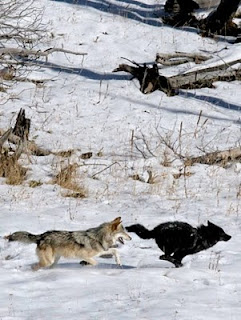
Showing posts with label Crippled Wolf. Show all posts

Friday, April 25, 2014

Nation of scofflaws: or, Teacher's petitude redux

Walhydra has been carrying this title around in her head for at least a dozen years, crafting and reciting sentences to herself, adding examples, grumbling. 

At first she was too angry to actually write anything down. Then, for several years, she was too much in grief Now she feels again the temptation to be publicly snarky—followed, of course, by having Goddess put her in her place once again. It's sort of a spiritual S&M ritual.

The obvious place to start looking for examples would be with driving.

Road rage imageWalhydra used to play this game on the way to work each day. She would count the number of “strikes” against her, a strike meaning that she lost her temper and cursed another driver. She always struck out before she ever got downtown.

Over the years she has tried various remedies.

With  speeders, for example, she turns herself into the sort of pokey old coot who used to piss her off so much—staying in the right lane with the cruise control set at the speed limit.  It's actually rather relaxing. Everyone on the road passes her.

The closer you get, the slower I goWith tailgaters, she recalls the advice of the defensive driving course the City requires all employees to take: "Slow down and invite them to pass."

(Walhydra imagines all sorts of questionable nuances for that word "invite.")


Despite these tactics, though, the truth is that Walhydra is too often terrorized by those manic stock car drivers who ride her bumper and race around her on both sides if she happens not to be in the outside lane.

"Are they crazy?!!" she shouts.

Stock car race

Then there are the in-town incidents with people who seem not to know the width and turning radius of their own vehicles. They swoop into oncoming lanes to turn right, to pull into diagonal parking or to pass parked cars.  They back out into oncoming lanes.

And they don’t know what that secret little stick on the steering wheel is for.

When she's honest with herself, Walhydra admits she feels disrespected and resentful over these incidents.

Jerry Mathers 1960She remembers growing up in a June-and-Ward-Cleaver America. Young people were taught to respect their elders, and it was just assumed that people would watch out for each other and practice common civility, rules of the road, etc.

This wasn't a matter of authoritarian imposition of order—contrary to what her peers believed during the "Sixties Revolution." It was simply a social contract, a courteous way of dealing with people in public to ease daily life.

Now it seems like people scoff at or totally ignore the contract.  Or deliberately violate it. Or...maybe...were never even told about or expected to obey it as kids.

Walhydra is constantly feeling offended and unsafe, because she cannot count on anyone to "abide by the code."

"Tomato juice."

"Wha—?"  Walhydra looks around.

Crippled Wolf glances up from the Stephen Jay Gould book he is chewing on.

"Tomato juice. Age five. Kindergarten."

"Oh." Walhydra doesn't really want to go there...but Crippled Wolf was there, too, so she can't very well avoid the issue.  The story was told back in 2006.
Tomato juice.
More exactly, spilled tomato juice. On her favorite flannel shirt. In front of other kindergarten five-year-olds, her first months in public school. Right after her family moved from the only home she had ever known.

They laughed, of course. For whatever reasons, Walhydra experienced it as laughing at her. Her peers had unknowingly introduced her to shame. In her personal mythology, that was the moment when Walhydra became self-conscious—in all the blesséd and cursed senses of that term....

It happens to everyone, of course. That disorienting schism between “I’m unique” and “I’m one of you.” Walhydra figures most of the crimes and sufferings of the human race can be traced to that schism.

What startled her awake, meditating on this, was that she had identified her own particular version of this turn on the path....
 
In her childhood, Walhydra’s line of defense was to become invincible.
Hermione Grander
She recognized quickly that “those in authority” were teachers. She was an utter failure on the playing field, due partly to non-paralytic polio at age four, and partly to having been shamed by the tomato juice incident....
However, she was gifted with being brilliant, creative and a quick study. The obvious survival strategy was to become a “teacher’s pet.”

This path had the advantage of making her immediately liked and protected by “those in authority.” It had the disadvantage of underscoring the message to her peers: “I’m
not one of you."
"We're not still five, you know," Crippled Wolf said patiently.

"Well obviously not!" Walhydra grouses, stomping and stretching to get the kinks out of her back. "What's your point?!"

"You're still feel bullied, and you hate it."

"Huh?"

"Those are aggressive drivers. Bullies.

"But also the teenagers...even the grade school kids you feel intimidated by. The people who don't watch out for anyone but themselves. The one's who take your seat or talk too loudly on their cell phones or expect you do whatever they want at the library services desk.

"They all seem like bullies."

Walhydra sat down. "And...?"

"...you don't feel safe. Don't know how to protect yourself. It doesn't feel like anyone's in authority anymore, does it?"

Walhydra frowned. It was never fun to find out that underneath whatever she disliked about other people was something she disliked about herself.

"Well.... There isn't anyone in authority anymore! Everyone does what he wants, regardless of how it affects other people."

"Yes."

"Yes? Is that all you can say? You're just like my fa...."
“It’s not fair,” she hears herself whining. Starting in first grade, she would frequently come home from some round of teasing by peers or unappreciative discipline by adults to voice that complaint to her father, the Lutheran pastor.

“You’re right,” he would reply. “It’s not fair.”

For years—at least thirty, she figures—Walhydra thought this meant he wasn’t a “good Dad,” because he didn’t go and fix it. Then one day she woke up and realized he had just been confirming her observation of reality.
"I listened to him," Crippled Wolf says gently. "You didn't want to."

"Yeah, well.... So what do I do?"

"Keep yelling at them (silently) as bullies, or be the sixty-four year old crone you are."

"Sixty-three!"

"Haha! Almost sixty-four. Come on. Let's go get a double waffle cone of double chocolate ice cream."

Walhydra smiles.

Chocolate cone

And so it is.

Blessèd Be,
Michael Bright Crow

Wednesday, September 21, 2011

Photography on RedBubble

Crippled Wolf is a tyro with the camera. However, he's been taking pictures in his head for 40-50 years, so he has decided he should try showing someone else what he sees.


1956 Kodak Brownie Starmite
To do this he has created an account on RedBubble, a "marketplace, meeting place and learning place of people, art and writing from all over the place." The new slideshow under the Photography heading on the Walhydra's Porch sidebar introduces the few images Crippled Wolf has posted on RedBubble so far.

Actually, Crippled Wolf started taking pictures back in fifth grade, using a little Kodak Brownie. He still has the little wood-bound photo album, filled with carefully mounted and labeled photos like these:

Circa 1960, Ohio

When he looks at these pictures now, Crippled Wolf is first amused and then smitten by memory. So strange that one can travel in time so easily.

Ages later, in the late 1980s, using an old Nikon he bought from a friend, Crippled Wolf took a darkroom course. (You know, where you actually develop film in baths of chemicals and mess with burning and dodging?)

Here is his best image, one of a gorgeous, mysterious stranger (who happens still to be his hubby 22 years later).

Jim at Adriana's, May 13, 1989
Still ages later, Crippled Wolf now uses a baby Canon.

He actually bought this toy in order to take pictures of the mold which had grown on the bedroom and closet walls in the rental home he shares with JimJim. That forensic evidence successfully convinced their...how shall we say?...frugal landlady that she should actually hire a real contractor to do repairs. The bonus was the pocket-sized, digital point-and-shoot.

As he does on many birthdays, Crippled Wolf went for a day of solo hiking again this year, this time to a place he'd just learned of after eleven years in Jacksonville, the Jacksonville Arboretum and Gardens.

Lots of experimental shots of lots of plants, trees, stones, etc. Lots of duplicate shots to play around with composition and natural light. Several dozen photos—most of which he has deleted (digital is handy for that)—and a handful he feels good enough about to post to RedBubble.

Here is Crippled Wolf's favorite:

Palmetto fans I, by Mike Shell

More to come.

Blessèd be.

Sunday, July 10, 2011

Bereft

bereave: O.E. bereafian "to deprive of, take away, seize, rob," from be + reafian "rob, plunder," from P.Gmc. *raubojanan, from PIE *reup-, *reub- "to snatch." A common Germanic formation (cf. Du. berooven, Ger. berauben, Goth. biraubon). Since mid-17c., mostly in reference to life, hope, loved ones, and other immaterial possessions. Past tense forms bereaved and bereft have co-existed since 14c., now slightly differentiated in meaning, the former applied to loss of loved ones, the latter to circumstances.
Crippled Wolf continues to be confounded by his mother Senior Witch’s death in January.

In the 2006 movie Eight Below, a team of husky and malamute sled dogs take care of each other and survive for six months in Antarctica after a severe storm forces their human companions to abandon them.

Eight Below (Max, center), by Walt Disney StudiosThe part of the story which resonates most for Crippled Wolf comes when Dewey, one of the huskies, falls off a steep slope and is fatally injured. The other dogs stay to comfort their teammate until he dies, but then they move on—except for the youngest dog, Max. Max, seeming not to understand what has happened, stays beside Dewey’s body for a day or so longer before following the others.

Crippled Wolf sees himself in Max. Rationally he understands what death is, yet that deeper animal part of him continues not to understand.

How can a person simply stop being?

He keeps going back to that bed with the curtains drawn around it and sitting next to the body, just as he did repeatedly on the night his mother died. Looking at the still face, touching the hands. Unable to reconcile memory of her with physical reality.

He keeps going back to earlier moments when, directly or indirectly, he and his mother acknowledged that she was dying.

There was the Sunday night in March of 2007, when he and she agreed that she needed to leave her home of forty years to live with his sister. Crippled Wolf is startled, as he rereads the story, to discover how much he knew when he told it that he didn't know he knew. But, then, that is part of the blessèd mystery of storytelling.

One passage which stands out now:

In one of her earlier heart-to-hearts with her Mom, Senior Witch, [Walhydra] had steeled herself to say something out loud, allowing her sobs to come as she spoke.

"I've realized a way I've been fooling myself for the past few years. I've been pretending that if I just did a good enough job of managing things and providing for you, you wouldn't grow older and die."

Her mother hugged her, and they were quiet together for a while.

Then Senior Witch said, "I've realized something, too. I've realized that for years I've been telling myself that I was going to die perfectly healthy. Isn't that silly?"

They both laughed.
Summer 2008, Columbia, SCAnd another passage:

"Do you remember," Walhydra asked, "back in September, when we went to rent a DVD that last night? You picked Iris, about Iris Murdoch's decent into Alzheimer's.

"And I kept wondering, all through the movie, 'Does Mom know this is what's happening to her? Is she trying to tell me something?' "

Senior Witch did her own Mona Lisa smile.

"I knew. And, no, I wasn't trying to tell you anything."
Three months later, Crippled Wolf was trying to comfort his mother through her homesickness. A year after that, once Senior Witch moved to assisted living in his own town, Crippled Wolf began taking her to Lutheran church services, so that she would feel more at home. He was bemused by their contrasting experiences of the same "structured worship.” Nonetheless, introspective awareness was something they could still talk about.

Summer 2009By fall of 2009, though, "bemusement" was rarely the word that came to mind. Senior Witch was falling repeatedly, yet she could not remember the falls or perceive how completely she had lost the capacity for self-care. At the same time, Crippled Wolf's father, the retired Lutheran pastor, was rapidly losing independence to Parkinson's disease.

Summer 2009"Mortality" was now quite decisively the word.

A brief passage from "The Dark, again," written after Senior Witch was hospitalized by a fall, sums it up:

The veil between the living and the dead is our own bodies. They are always thin, and they grow thinner by the moment.
More specifically, with regard to caretaking for Crippled Wolf's mother, the fact was that

Senior Witch has clearly moved into the childlike phase of Alzheimer's.

She still remembers people. She is still that sweet person who charms everyone she meets. She still sometimes summons the mental focus for brilliant conversation.

Usually, though, she takes a child's approach, making up explanations and excuses for troubling things that happen…including that fall. And she rewrites her own history, free-associating different real and imagined details to account for events…including that fall.

She is unlearning. The likelihood of teaching her new safety steps is questionable.
And here is where Crippled Wolf wonders if he made a mistake.

Not in the practical choices, as painful as some of them were. Senior Witch had to move into skilled nursing care—against her will but for her own safety. After a series of systemic infections and an increase in combative and escape-seeking behavior, she had to move to a different, secured nursing facility. The staff were gentle and loving, yet Senior witch resented being confined to a wheelchair as a "fall risk," no longer allowed her favorite activity of walking and wandering and visiting without accompaniment.

Crippled Wolf does not regret those choices, made out of what he came to call “compassionate ruthlessness,” the sort of choices a good parent makes for his child’s wellbeing, regardless of her own wishes.

What Crippled Wolf wonders is if he gave up on seeking introspective sharing with Senior Witch too soon. He knows he was afraid of asking her directly how she perceived and understood her own dying.

He circled round the topic one time in the first month after he moved her into skilled nursing care. They were sitting on a tree-shaded deck, watching Chinese geese in the large pond behind the facility.

“I’m remembering…,” he begins. “I’m remembering when you used to have long distance calls with your mother during her last years.”

“Yes,” Mom says, brightening a bit. “We used to talk on Sunday afternoons.”

“Yes, I remember.”

They sit.

She notices a spent yellow balloon, caught in the low branches over the pond.

“Grandma didn’t like moving to nursing care, either,” Crippled Wolf ventures.
“No.”

“She was angry about it.”

“Yes.”

They sit.

They notice other things. All of this time, they have been holding hands.

They hold each other’s eyes for a long time.

She doesn’t nod, but something flickers in her eyes, as if she were nodding.
Crippled Wolf regrets that he didn't ask outright while she could still answer. Perhaps they didn't need "the death conversation," since they had spoken so much to each other about faith and doubt, so deeply and so frankly, for so many years. Yet he wishes he knew....

He suspects that sometimes his "Quaker silence" is actually a defense mechanism, a way to avoid having to talk with others about his most intimate doubts, his most self-contradictory notions and prejudices and fears.

During her last year, Senior Witch often could not find words for what she wanted to say. If she spoke spontaneously, she could voice a cogent sentence or two. However, if she stopped to think, or if someone else asked a question which called for pondering, she could no longer manage to express her inner awareness in language.

St. Johns RiverFortunately, over the years, she had attended Quaker worship often enough to be quite at home sitting with Crippled Wolf and Hubby Jim in gathered silence. Eventually, in fact, she chose Quaker worship over the Lutheran service, simply because the latter had become too difficult for her to follow. They would sit with her several times a week in the nursing facility's riverside garden, just holding hands and watching the light on the water.

Crippled Wolf has been reading about the neurobiology of consciousness for about a decade now, so he knows from the research that the brain creates "self-awareness" through a complex, network of constantly shifting and interactive processes. He suspects that he watched this creative process in reverse with Senior Witch, as her Alzheimer's-afflicted brain became increasingly less able to sustain the whole assembly which constitutes conscious self.

He and Jim often noticed, when they arrived for a visit, that she would initially appear to be staring vacantly at something. When they spoke to her, she would gradually focus and recognize them with a beautiful smile. As the visit continued, whether or not they spoke much, her "self" would seem to reassemble, so that she gradually became more and more the person they knew and could interact with. Whatever her inner experience might have been, what they could see was that rising of "self" just enough to recognize and share presence with them.

Early the morning of Senior Witch's last Wednesday, Crippled Wolf awoke from a dream which he knew he needed to share with her. He went see her before work. She was in a recliner in the hall outside her room, lying in the morning sunlight. She smiled when she saw him.

"I dreamed this morning that we were at a party," he told her. "You and your three brothers and some other people were there. You were telling jokes, the center of attention, and everyone was laughing and cheerful."

Without a word, she nodded and smiled at him.

"Well, I have to go to work now," he said. "I love you."

She mouthed the words. "I love you."

Friday morning early, a nurse called to say that Senior Witch had been sick during the night. Crippled Wolf stopped at her room on the way to work.

At first she looked startled and distressed when she saw him. Then he held his left hand to the right side of her face. She closed her eyes and leaned against his hand.

That night, he and Jim watched as she gradually stopped breathing.

Crippled Wolf doesn't know if there is any continuity of the "self" after death. It's a familiar, traditional belief, yet he is not one of those people who—as the Quakers say—"knows this experimentally" (that is, experientially).

That, perhaps, is part of why he continues to be confounded, like the sled dog Max

She continues in memory, yet he doesn't know where she is.

November 2010, with Jim and his sister, LibbieAnd so it is.

Blessèd be.

Sunday, May 09, 2010

Ruthlessness

Crippled Wolf has been trying to help Walhydra get back to telling her story here. It isn’t easy, because they share a common grief, a common burden of seemingly overwhelming responsibilities.

Walhydra has been struggling for months—actually for several years—with the dilemma that worry and grief are difficult to turn into comedy. Through March and April, Walhydra's mother, Senior Witch, took another downturn due to a systemic infection. Walhydra has had to focus herself ruthlessly on "getting things done." No time for storytelling—except when she is crying with hubby Jim or updating family and friends.

"At least now," Walhydra says, "I usually recognize those first steps toward depression when they tempt me, and I’m fighting not to go there."

A small comfort but a real one, since she needs to be able to act.

As for Crippled Wolf, it's not that he feels the sorrow and loss any less. It's just that, being closer to the animal reality of humankind, he can be more dispassionate, more ruthless if necessary, in dealing with what happens to him.

Druid pack wolves runningHe feels grief, feels it deeply, yet it is something which happens in the stream of moment, not something which stalls the flow.

He howls his sorrow, yet he knows he must keep acting, keep running, keep hunting, keep playing—not to avoid or deny the pain, but simply to continue being.

Recently, Crippled Wolf's younger brother, one of the bravest men he knows, told a story on himself which resonates here.

Younger Brother has always had to be more of a maker, more of a scrapper, than Crippled Wolf needed to be. Third child, he was the spiritually orphaned high-schooler who had to find his own way, after his elder siblings left for college, when their parents were withdrawing into the silence which would eventually lead to divorce.

Younger Brother is a gifted actor, writer, teacher, director, yet he hasn't enjoyed much of the reliable mentoring and door-opening by elders which have flowed his brother’s way. He has had to father himself and to become a good father on his own. His blessing is that he has done both well.

For the past two decades, Younger Brother has fended for and defended his wife and son in a progressively more bankrupt northern city, where teen gang warfare encroaches on his neighborhood, where his artist wife has lost her non-profit child development job, and where the university he works for disdains the theater program they hired him to develop.

At the start of this year, the university suddenly moved the whole performing arts faculty out of a building they were tearing down and into temporary quarters, with no promise that a new building was in the works—and with no performance space of their own!

To make things more “interesting,” this year Younger Brother is acting chair of that department while the chair is on sabbatical leave. This means that, at the same time that he is teaching theater arts without a theater, directing two community group plays, and encouraging his wife and his brilliant college-senior son, he also has to manage the administrative needs of a displaced and frightened orphan faculty.

Oy!

Narrating all of this by phone one night, Younger Brother laughed almost maniacally.

“I’m finding that I just scale back my attention to the emotional distress of my colleagues when they bring problems to me. I listen, but then I set it aside and say, ‘Just tell me what you want to get done here.’ “

He laughed again.

“One program director hand-picked an associate fifteen years ago, but now they can’t be in the same room with each other. She comes to me with complaints about personality conflicts, and I just say, ‘But what do you want her to do? Make it clearer for me. What do you want to have happen here?’ ”

“Ah,” said Crippled Wolf, recognizing tactics for managing crisis from his own prison counselor past. “So you’re actually directing three plays.”

More than three!”

Crippled Wolf came away from this call with a paradoxical new name for an old notion: compassionate ruthlessness.

There are times when caring for people means maneuvering them to get on with business. There are situations—whole periods of life—when what is happening is too fraught with mortal consequence for us to nurse feelings. Feelings are information. Acknowledge the information, then act.

Cry later.

“You have to cry,” he says. “You have to honor the body’s need to release the grief. But do it later, after you’ve saved whatever lives or life you can save.”

Not nice. Not courteous.

Yet perversely salutary.

So, Wednesday morning, Crippled Wolf walked into the “secure” ward in the new skilled nursing facility to which he has had to move Senior Witch due to her increased escape-seeking and oppositional behavior.

Senior Witch glared fiercely from the wheelchair in which she is restrained, since the rehab staff haven’t released her back to her walker yet.

“This is the worst place I’ve ever been!” she growled. “This is like….” She couldn’t find words to describe it.

“Okay,” Crippled Wolf replied neutrally. “Well, let’s go get your glasses and hearing aids, and we’ll go walk in the garden by the river.”

He wheeled her to the nursing station, got her things, wheeled her to the garden path, and helped her climb out of the wheelchair, so that she could walk beside him.

They walked and sat and talked and watched the river and looked at the roses. Senior Witch surprised him, when he gave her a new card from one of her stepdaughters, but immediately reading the whole thing out loud to him.

They spent an hour together, just being.

He said nothing about her anger.

Back in the ward—after he had made sure the nursing staff saw how well she could walk—Crippled Wolf helped her back into her wheelchair. He knelt beside her, kissed her, and said, “I’ll see you this weekend. I love you.”

“I love you, too,” she said.

As he walked away, Crippled Wolf watched her genuine smile deflate into a forced one.

He knew he needed to get home, so that he could howl with Jim.

And so it is.

Blessèd Be.

Running Wolf

Saturday, November 07, 2009

Howling

Crippled Wolf is sitting with his mother on a tree-shaded deck, beside the large pond behind the skilled nursing care center to which he moved her three weeks ago.

White Chinese GooseA fountain sprays in the middle of the pond, and three large white Chinese geese float nearby, watching intently for handouts.

This is not a scene Crippled Wolf had ever wanted to play. No one ever wants it.

“Part of my problem,” he tells himself, “is that I’ve been reading scenes like this almost since I started reading on my own.

“Books are full of death and dying.

“More to the point, I’ve had close friends die. I’ve watched a friend release his last breath.

"I think all of that created the illusion that I am used to dealing with death.”

He glances over his right shoulder toward the gently fluttering maple leaves. Sparkles of sunlight dance through the shadows.

“Till now I could keep the concreteness of death at one remove. Reading and writing and watching have given me lots of scripts for such a scene….

“But this is no scene. This is in my flesh, in my mother’s flesh.”

He looks back into his mother's dark, piercing eyes.

"I don't know if I can deal with my being here," she tells him.

"I know," he replies. "I don't know if I can either. None of us wanted this to happen."

They sit.

A blue jay calls their attention.

They sit.

The geese shriek out their horrible, grating hello.

"It's such an ugly voice," Mom says, "but they're beautiful birds."

"Yes."

Crippled Wolf and Walhydra have been balancing this grief between them for two months now, pretending that they can stabilize it, when they know that in reality each next moment changes the outer and inner forces at work.

"How can you just sit there?" Walhydra demands.

"How can I not?

“My human self cries out to change what is happening, to turn back the clock. I curl into a ball at night, crying for my mother, and then I howl when I remember that she cannot come to comfort me.

"Yet nothing changes what is happening. My animal self knows just to watch and wait."

"I hate it!"

Crippled Wolf nuzzles up against Walhydra. "Grouchy old lady."

"Articulate grouchy old lady," she says, sadly.

"There is that."

Red-bellied WoodpeckerA knock-knock to Crippled Wolf's left.

"Oh, look!" he says to his mother. "A woodpecker! See?"

"Yes. I see him!"

They sit.

Then, after a long pause, she says, “Look,” pointing behind him to the sparkle in the maple leaves.

He knows that, somehow, he needs to invite Death into the conversations he is having with his mother. He needs to do this while she is still lucid enough to talk about it…or at least to think about it.

It’s not a matter of what they should say to each other on the subject. It’s just that Death needs to be available in the conversation.

“I’m remembering…,” he begins. “I’m remembering when you used to have long distance calls with your mother during her last years.”

“Yes,” Mom says, brightening a bit. “We used to talk on Sunday afternoons.”

“Yes, I remember.”

They sit.

She notices a spent yellow balloon, caught in the low branches over the pond.

“Grandma didn’t like moving to nursing care, either,” Crippled Wolf ventures.

“No.”

“She was angry about it.”

“Yes.”

They sit.

They notice other things. All of this time, they have been holding hands.

They hold each other’s eyes for a long time.

She doesn’t nod, but something flickers in her eyes, as if she were nodding.

And so it is.

Blessèd Be.

Wolf Howl

Sunday, November 01, 2009

The guest

Recently, Walhydra has at times heard an indistinct yet somehow familiar voice murmuring in her ear. It has taken her a while to notice enough of a pattern to these occasions to realize that she should be paying attention.

Walhydra hears the voice most clearly during certain interesting moon phases. She also hears it, sometimes, if she makes a particularly satisfying movement or stretch during taoist tai chi chuan.

Taoist Tai Chi Society“Ah. Thank you,” the voice whispers.

“What? Who?”

After over three years of classes and practice, Walhydra’s body has learned to recognize quickly the relaxed and energized templates of full extension and settled, balanced weight—whenever she happens to stumble into them, that is. In fact, Walhydra is now more often able to stumble into them on purpose.

During the rare moments when this happens, Walhydra’s body rediscovers all of its missing parts. In particular, there is the matter of rediscovering her whole right side, from toes to crown.

Though Walhydra is naturally left handed (of course), she has also struggled since her fourth year with muscular and neurological asymmetry on the right, caused by non-paralytic polio. When she is inattentive—in other words, most of the time—Walhydra’s right foot, knee and hip splay outward a bit, throwing her whole frame off balance. To compensate, she has a chronic rightward crick in her neck, and something resembling a skyhook pulling up her left shoulder.

Though these distortions may only be outwardly observable to the trained eye, the gentle reader is left to imagine what fifty-some years of standing and sitting this way must feel like from the inside.

"It's as if I've spent most of my live hunching away from a blow," says Walhydra. "Shield arm raised—rather awkwardly—but sword arm useless."

The voice chuckles at this uncharacteristically warrior-like imagery.

"Huh?" Walhydra grunts, glancing around.

[Note from the amanuensis: It is definitely awkward to raise one's arm mainly with the trapezius rather than the deltoid.]

Back in the spring, Walhydra managed to get through two weekend tai chi intensive workshops. In both, advanced instructors from the USA headquarters concentrated on a few crucial movements, for the sake of deciphering, demonstrating and having students practice the precise angles and articulations which would enhance the health benefits of those efforts.

Walhydra was amazed at the consequences.

A core principle of taoist tai chi is to relax shoulders and lower back, to settle one's weight into one's hips and thighs, and to make one's movements by pushing the floor away and rotating around one's spine with the power of those thigh muscles.

A second core principle is to turn only within the angle between one's line of travel and forty-five degrees, and no farther.

[The various martial schools of tai chi use different principles, yet this approach focuses one's practice on the organic benefits of the movements.]

Two seemingly minor bits of personal coaching during those intensives turned all the lights on for Walhydra.

First, in a movement call a toryu [see image below], one foot is forward, while the back foot is turned out "at the 45."

One moves one's weight alternately between the front and back feet by pushing against the floor, turning, and dropping the weight into the opposite hip. Walhydra tends to wobble whenever she turns her weight onto an angled right foot and hip.

Toryu, Tallahassee Taoist Tai Chi Society"Put your front foot a step farther forward than you're used to," an instructor hinted.

As odd as this felt, Walhydra tried it. With this small change, she found that the very structure of her skeleton obliged her to turn only forty-five degrees, instead of allowing her to collapse farther backwards.

It was as if her body were suddenly saying, "Oh! You mean that 45!"

Second toryu hint, a different instructor, a second intensive. "When you turn back, when you turn forward, keep your head and chest upright and lead with your heart."

Wow! This was like the lightning bolt of awakening from on high!

In the weeks that followed, Walhydra would get distracted while doing the tai chi set in regular class, because she kept sensing a degree of poise and extension she'd never experienced before.

"I have a right arm!" she exclaimed to her own instructor, only half in jest.

Eventually, she also discovered a right hip and leg. More recently still, she discovered an all-important deep body muscle: the right psoas!

[ For more on Walhydra and the "secret life of the psoas," see this story.]

All of this new awareness doesn't last, though, without conscious attention. In part because Walhydra is so lousy at maintaining any sort of daily practice on her own. Were she to do so, the conscious attention would become body knowledge.

Which brings us back to that voice.

One day, in the midst of some movement or other, Walhydra felt the characteristic popping of joints which comes with unkinking the right side of her neck.

Then her right shoulder and elbow and wrist popped, as she extended that arm. Then the right hip and knee...and all the way down to the bunioned right big toe.

"Oh!" said Walhydra.

And then, "Who's that?" said Walhydra.

Because it felt as if her whole right side had come alive and been fleshed out by...someone.

"You don't remember me?" asked the voice.

"Crippled Wolf! What are you doing there?"

Wolf Stare, by moosewhisper"I live here."

"But...that's part of me."

"Yes."

"But how can you be there?"

"Do the math."

"Um...."

Walhydra puzzled over this one for a bit. She had thought that Crippled Wolf just existed in her mind—or maybe in her imagination.

"Well, yes. But I'm part of our body, too."

"Our?"

"How not?"

"Um..., well...." Walhydra felt very strange for a while, so she went back to concentrating on the tai chi set.

During her next class, Walhydra felt her usual collapsed-ness when dropping the weight into her right hip.

By chance, she straightened her neck again...and Crippled Wolf filled out her right side, directing the weight properly.

"How do you do that?" Walhydra exclaimed.

"You let me, when you straighten your neck."

"But it feels like I'm leaning my head to the left."

"You are. You're straightening your neck to the vertical."

"Oh."

Walhydra felt exhilarated and confounded at the same time.

"But...." She grasped for words. "It's as if someone else is in my right side. Someone I can't feel."

"It's just me."

"But why...?"

"Why do I feel like a phantom? Because you've been pretty much ignoring me for fifty-five years. That's why."

Walhydra shut up for a while.

The next time she wanted to extend her right arm, Walhydra straightened her neck again. And there was Crippled Wolf.

"This is going to take some pondering," she muttered to herself.

Since then, Walhydra's body has been the laboratory for an on-going experiment.

Walking through the reference stacks at work, she will straighten her neck ("pop, crunch") and unfasten her left shoulder from the skyhook ("crunch, pop")

"I'm still here," Crippled Wolf will whisper, as he stretches luxuriously.

Climbing the Main Library's pretentiously named Grand Stairway in the mornings, she will alternately sink her weight into one hip and then the other, each time pushing off with that foot.

"I'm still here."

Best of all, walking sometimes, or even just standing at the reference desk, she will push the floor away with her right root and feel Crippled Wolf rise, bone by bone, tendon by tendon, aligning each joint in turn from that bunioned big toe to the top of her head.

"You see what it's like when you let me be here?"

But Walhydra is understandably puzzled by all of this.

"Where have you been for fifty-five years?" she asks.

"Here."

"Why couldn't I feel you there?"

Crippled Wolf ponders this for a long time.

"Remember that first time we talked, after the werewolf dream?"

"Yeah...?"

"I asked you what you feared about the dream, and you daren't answer my question."

Walhydra's turn to ponder.

"I remember," she murmurs at last.

"I think it's about our believing we weren't allowed to be a 'real' boy."

Walhydra ponders some more.

"Um...what do you mean?"

"What do you remember, with the first little kids you knew, right after the polio?"

"Being happy. They liked me."

"Yeah. I remember that, too. But what do you remember about the new kids after we moved, the year after the polio."

Walhydra frowns.

"Kids laughing at me for spilling tomato juice on myself in kindergarten. Boys teasing me in first grade, because I was lousy at kickball. Being called a sissy."

"Yeah," Crippled Wolf says.

A long silence.

"Do you remember the first boy you had a crush on?" Crippled Wolf's tone is gentle.

Walhydra feels embarrassed. "Jeff, on Lassie."

"Any others?"

Tim Considine as Spin Evans, on the Mickey Mouse Show"Um...." Walhydra feels more embarrassed. "Spin, on Spin and Marty."

"Why?"

"Just because they were regular boys...I guess. And they were...um...cute."

"Nothing sexual?"

"I was five! Are you kidding?!"

"But not a regular boy. Not a 'real' boy."

Walhydra feels her anger rise.

"Are you saying that's why I'm gay?!"

"No, no!" Crippled Wolf says earnestly. "We've always been gay. I'm just saying that's why you forgot about me. Because they all kept telling you you weren't a real boy."

Walhydra has to sit down. After a long time, her curiosity gets to her.

"Are you gay?"

"I said 'We've always been gay.' Of course I am."

"But you're a real boy?"

"Of course we are! Look between your legs."

"Oh. Well. There is that."

"Dodo!"

"Poopy!"

Startled at hearing herself yell this childhood insult, Walhydra gives a boyish giggle, which Crippled Wolf echoes.

Then she remembers childhood shoving and teasing matches with her younger brother—who never said she wasn't a real boy.

"Yes," says Crippled Wolf. "There's always been that blessing. Our brother—and our sister."

"Yeah," Walhydra says, smiling. "But then...we were all pretty weird kids."

"The best kind."

Walhydra feels a glow. But then she stops short.

"But...," she begins. "But how come you're only coming out now? When I'm almost sixty?"

It hurts to ask this.

"It takes a long time to heal."

"From polio?"

"No. From teasing."

Walhydra sits a long time after this comment.

"Um. How come you call yourself Crippled Wolf?"

"Because we're crippled."

"By teasing?"

"No. By polio."

"But you said 'healing'."

"Yes. I said 'healing.' From being shamed, being teased. Not 'cured' from polio."

Walhydra stares ahead.

Crippled Wolf whispers in her ear, "That's what Jesus did, by the way. He healed people."

"Oh."

And so it is.

Blessèd Be.

Running Wolf


Saturday, July 12, 2008

Crippled Wolf

Walhydra has been speaking recently with her friend Crippled Wolf, someone she has not mentioned before in this blog.

She and Crippled Wolf are twins of a sort, although she didn't even know about him until about four years ago.

Crippled Wolf says he came into being around the same time Walhydra did, when the amanuensis had polio at age four. He remained silent, though, until there was a dream.

In the dream, Crippled Wolf is a man just entering his sagehood.

To his kitchen door comes an athletic youth of twenty or so, fleeing from werewolf hunters. Although Crippled Wolf's friends, sitting inside at the table, try to warn him away from the youth, he knows immediately that this young man is to become one of his lovers—even though they will probably never make physical love.

The unnamed youth holds Crippled Wolf's eyes calmly, despite the danger of his flight. They need no words for Crippled Wolf to understand everything.

Before him stands a werewolf, yet almost nothing of human lore about such creatures is true. These are, in fact, wolves who have been cursed—or so it seems to them—into living as human beings, save for the night of the full moon. Only then can they return to their true forms. Only then can they remember all that they know.

"Make me one of you," Crippled Wolf whispers.

"You are one of us. Come with me."

As they flee, the full moon rises.
"Well," Walhydra exclaimed somewhat nervously upon waking. "That was a pretty story."

"What do you fear about it?" Crippled Wolf asked.

"Um.... Do we really have to go there now?"

"No."

"Well, then. I need to let it season for a while."

"As long as necessary. Blessèd Be."

Crippled Wolf withdrew into silence, though not out of memory.

Earlier this week, without conscious decision, Walhydra summoned him back.

She was leaving her library, just after lunch, on her way to another where she was subbing as Person in Charge for the afternoon.

As she crossed the street, she spied a tall, lanky young construction worker heading to lunch in the same direction she would be going. It was the sweaty sheen of his spikey hair and face which first caught her eye.

Damp teeshirt, scruffy blue jeans and work boots, his white construction helmet in one hand. A face which recalled Depression Era photos of resolute young men intent on survival.

Walhydra quickened her pace so that she could watch his butt shift as he walked. One of the best features of men—straight or gay—who are comfortable with their manhood.

It wasn't long, merely moments, before Walhydra began laughing at herself over the contrast between them.

Here she was, a gay male librarian of nearly 58 years. Short hair, wiry bronze-framed bifocals, grizzled goatee. Unbuttoned casual dress shirt, pleated-front khaki slacks and an upscale khaki "outdoors" vest (made in China), its numerous pockets full of electronic geegaws.

On her way to play manager-for-a-day in a tiny, African-American neighborhood branch library.

Not too conscious of her manhood at the moment, yet wearing it as she'd become accustomed to doing.

Having been trained admirably "behind the wall" during her prison counselor years, she drew up casually beside the young man, as if by chance while on her way somewhere else. Her cruising was strictly an "intellectual hornies" thing, not to be signaled in any way, out of respect for the other man's privacy.

In that carefully neutral way she'd learned on the prison yard, she glanced at the worker, said "Hey," and gave the briefest of head nods.

The young man glanced back with an open face, said "Hey, man" back, and went on his way into the parking garage, while Walhydra continued down the block.

"Ah, that was nice," said Crippled Wolf.

"What...? Oh, you're back."

"Yes." Crippled Wolf settled into a loose-limbed walk. "That was nice. I'd almost forgotten how it feels."

"Huh?"

"A simple man-to-man acknowledgement. No challenge, no posturing. Just brief eye contact, a nod, 'Hey, man,' and off to your separate chores. Nice."

"I don't get it," Walhydra wondered.

"Yes you do. He recognized me as a man—despite our obviously different worlds and roles. Saw I did the same for him. Tipped his hat, so to speak.

"No gender role challenges. Nothing to prove. Just 'Hey, man.' Nice."

They walked on to the car together, feeling content.

All afternoon, while Walhydra observed and remembered, Crippled Wolf enjoyed the slow, warm, easy pace of chatting and teasing with confident Black adults in their own element.

It was like being back in a prison dorm office—complete with broken air conditioning—hanging out with the male and female security officers. People who knew their authority was not about their uniforms or titles, but about how they carried themselves, how clearly and consistently they enforced the boundaries, and how uncompromising they were in respecting the inmates and demanding the same in return.

Crippled Wolf worked and joked with a woman about his age. ("I'm a great-gran, as of last week," she laughed, showing him the baby pictures on her cell phone.) He watched with admiration as she shepherded customers of every generation with equal attentiveness.

Children: "Little Man, I didn't even see you over the desk when you said 'Excuse me.' You're so polite."

Teens: "Look me in the eye when I'm talking to you. Don't you look away like you're angry. I told you to share the computer with him."

Peers: "Girl, you way too cool. She and I"—turning to Crippled Wolf with a laugh—"been harassing each other for years."

Elders: "Yes, ma'am, Mrs. Hendricks. Now you have a blessed day."

Meanwhile, a security officer with a linebacker's build and deep, patient voice alternated between keeping the boys in line ("Gentlemen, stop that language or leave.") and working the print release station to make certain Mrs. Hendricks' multi-page Microsoft Word document came out right.

Crippled Wolf sat and beamed, worked remotely on his management reports, or did chores like calling in computer problems. "I'm just here in case someone in the chain-of-command has to take the blame," he grinned, readily deferring authority of place to these people.

A sweet afternoon with real colleagues.

And so it is.

Blessèd Be.

Running Wolf


Note: Friday, October 29, 2004, one morning after a total lunar eclipse.